
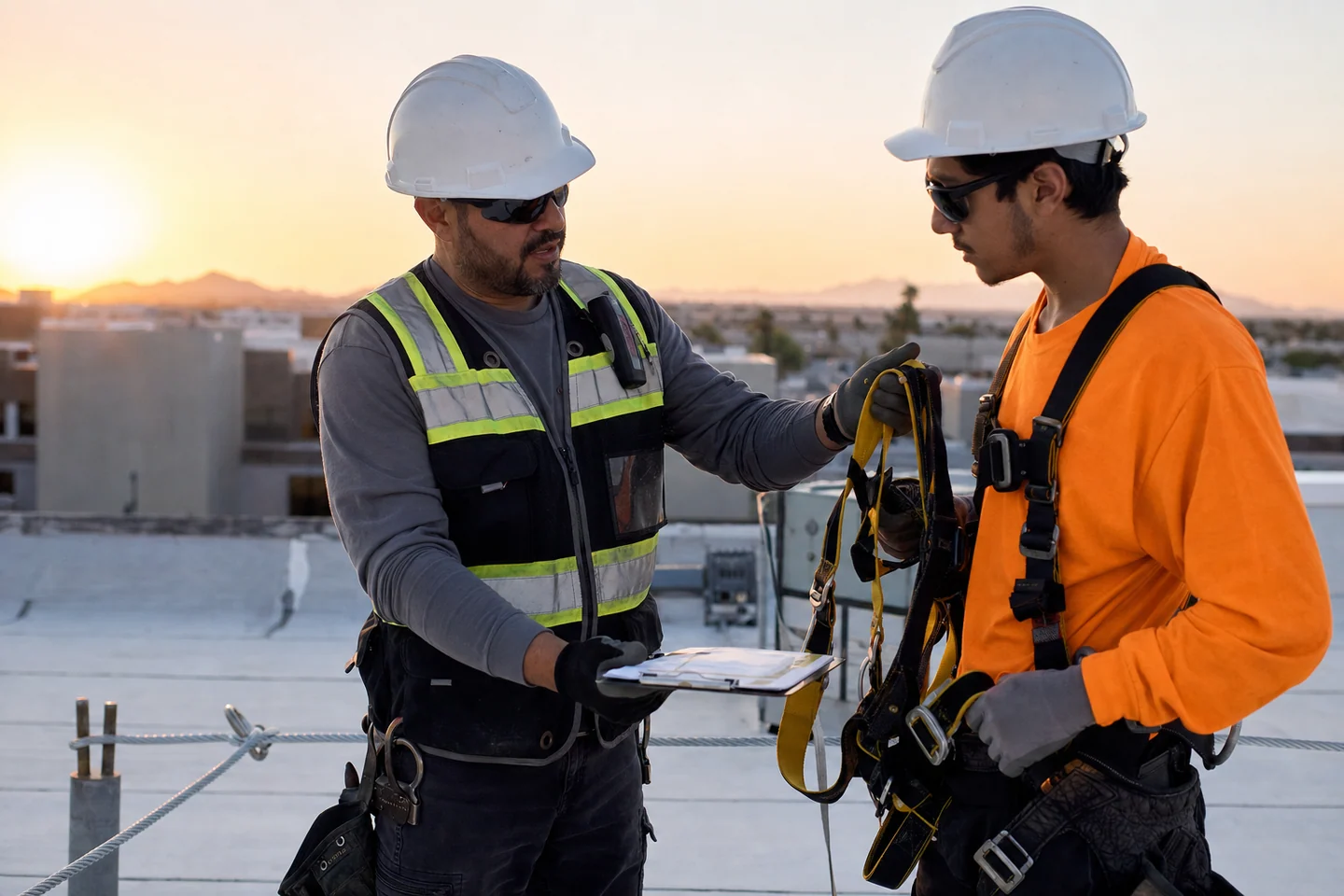
Show Arizona roofers how stronger onboarding can lower comp costs and improve safety outcomes.
Why onboarding matters for Arizona roofing comp costs
For Arizona roofing companies, workers compensation results are shaped long before an injury claim is ever filed. One of the biggest drivers is what happens when a new employee steps onto a roof for the first time. If onboarding is rushed, informal, or inconsistent, the business can create avoidable claim pressure within days of a hire.
That makes new-hire safety a strong blog topic for PrimeRisk Insurance Solutions. It fits the agency’s core contractor audience, stays close to the requested roofing and workers comp themes, and avoids repeating existing topics on payroll mistakes, audit checklists, return-to-work planning, and hot work fire claims. It also offers a practical angle that roofing owners can act on immediately.
OSHA’s publication Protecting Roofing Workers explains that roofing work creates serious fall, ladder, and material-handling hazards and that employers should use training and hazard controls appropriate to the job. OSHA’s construction safety standard at 29 CFR 1926.21 also requires employers to instruct employees in recognizing and avoiding unsafe conditions. Those points matter because many early roofing injuries do not happen because the worker is careless. They happen because the worker is unfamiliar with the company’s systems, pace, and expectations.
New hires are often learning several things at once: where tools belong, how materials are staged, how crews communicate, what fall protection is being used, and how the company handles access, cleanup, and emergencies. In Arizona, heat adds another layer. A worker who is trying to keep up physically while still learning the job may be more likely to make a bad decision, miss a hazard, or fail to report a strain before it worsens.
That is why onboarding deserves attention as a workers comp topic, not just an HR topic. The strongest roofing companies treat the first week like a risk-control window. They slow down enough to train well, because they know one preventable injury can affect crew stability, productivity, and insurance costs for much longer than one week.
Training and supervision steps that reduce roofing claims
Once a roofing company sees why the first days matter, the next step is building a repeatable training and supervision process. That process does not need to be complicated, but it does need to be specific to roofing. A generic safety packet handed to a new employee in the office will not do enough for a crew member who is about to work at height in Arizona heat with ladders, harnesses, tear-off debris, and time pressure all around them.
OSHA’s construction standard at 29 CFR 1926.21 requires employers to instruct employees in the recognition and avoidance of unsafe conditions. OSHA’s fall-protection training standard at 29 CFR 1926.503 goes further by requiring training from a competent person for workers exposed to fall hazards. For Arizona roofers, that means onboarding should cover far more than paperwork.
A strong first-week process should usually include:
- Fall protection basics: how the crew uses, inspects, and stores harnesses, anchors, warning lines, and other systems
- Ladder and access safety: how workers get on and off the roof without creating avoidable exposure
- Heat and hydration expectations: especially important during Arizona summer work
- Material handling and housekeeping: how to reduce strains, slips, and trip hazards
- Injury reporting: when to report a near miss, strain, or incident before it becomes a worse claim
Supervision matters just as much as training. New workers often understand instructions better after they see the routine in the field, not just in a break room. Pairing a new employee with an experienced crew lead for the first stretch of work helps reinforce how the company actually expects roofs to be accessed, materials to be staged, and hazards to be handled.
For PrimeRisk’s audience, this matters because roofers often feel workers comp costs after a season of hiring, not before. Better onboarding gives the company a chance to improve the story before those losses show up in claims history and renewal discussions.
FAQ and annual review for safer comp results
Arizona roofing companies do not need an elaborate corporate training department to improve new-hire safety. They need a consistent onboarding routine that supervisors can actually follow in the field. The best place to start is a short written checklist for every new roofing employee, used during the first week and reinforced during the first month.
A practical annual review should include:
- Updating the new-hire safety checklist for current roofing methods
- Confirming who is responsible for first-week supervision and signoff
- Reviewing early-tenure incidents and near misses from the prior year
- Refreshing fall-protection and heat-safety training with crew leaders
- Comparing onboarding practices to workers comp goals and claim trends
Arizona employers can also use the Arizona State Plan information page as a starting point for understanding state safety oversight connections through ADOSH. That makes the article locally relevant without turning it into a technical legal discussion.
What makes this topic strong for PrimeRisk is that it blends practical field operations with insurance outcomes. It is not just another general safety article. It helps roofing owners connect training, supervision, and claim control in a way that is useful before renewal and before peak hiring season.
FAQ
Why do new hires create higher workers comp risk for roofers?
Because they are still learning fall protection, ladder use, material handling, and the pace of roofing work, which increases the chance of preventable mistakes.
What should roofing onboarding cover first?
It should start with fall hazards, equipment use, ladder safety, heat exposure, housekeeping, and how injuries or near misses must be reported.
Does OSHA require safety training for roofing workers?
Yes. OSHA construction and fall-protection standards require employers to instruct workers on hazards and train employees exposed to fall risks.
What is one easy first step for an Arizona roofer?
Create a first-week safety checklist that every new employee completes with a crew lead before working independently.
How often should a roofing company review onboarding?
At least annually and after any significant injury trend, hiring surge, or change in roofing methods.