
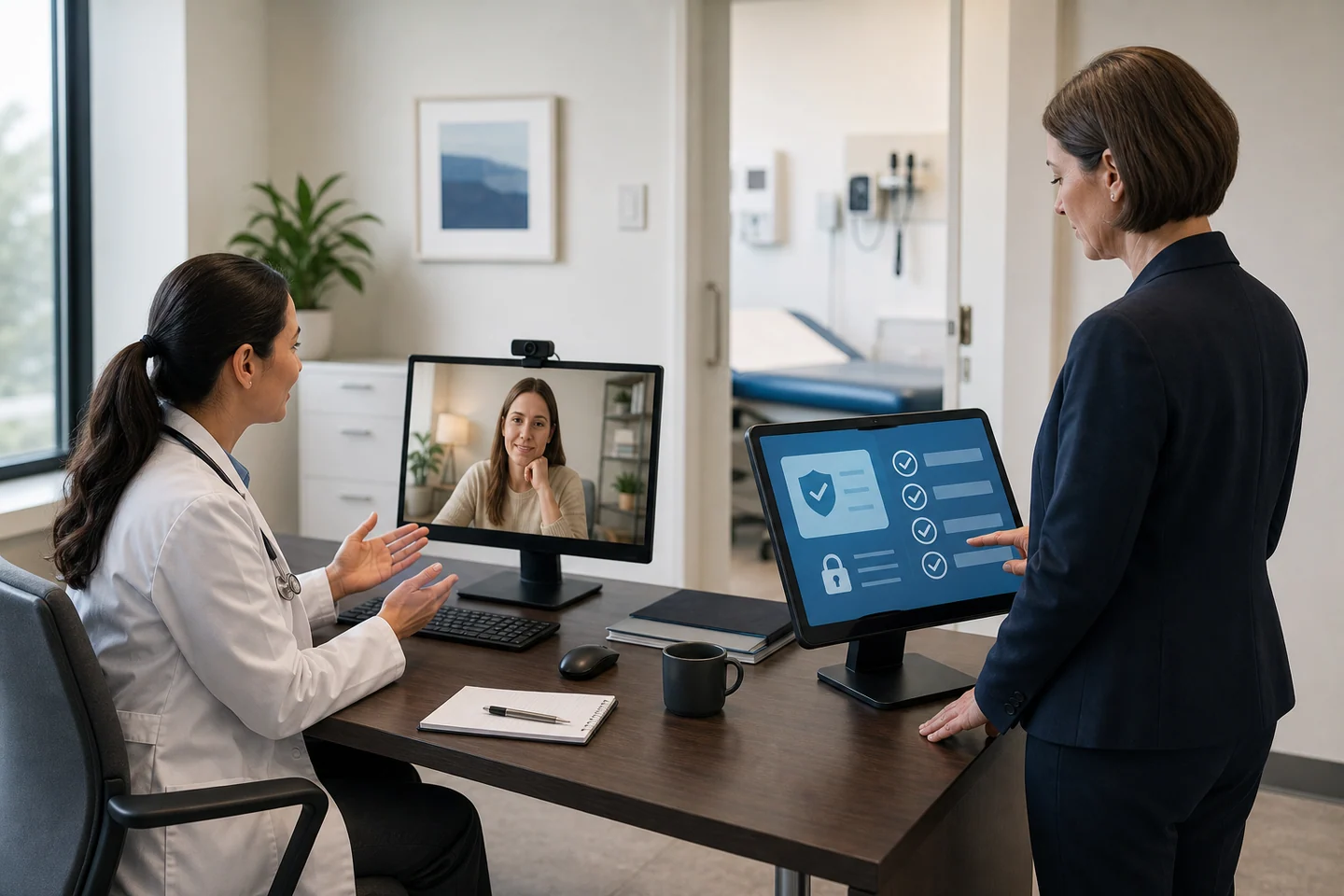
Help telehealth providers align cyber insurance, HIPAA duties, and virtual care workflows.
Why telehealth changes cyber exposure for modern providers
Telehealth made healthcare more convenient for patients and more flexible for providers, but it also changed where cyber risk lives. Virtual visits now rely on video platforms, patient portals, secure messaging, intake forms, scheduling tools, and connected vendors that sit outside a traditional clinic workflow. That means a cyber event can disrupt care long before anyone thinks about a formal breach investigation.
Search research supports the topic. Strong interest around cyber insurance, telehealth providers, and related cyber-risk language shows that providers are trying to understand how virtual care changes their exposure. The opportunity here is not only search volume. It is relevance. Telehealth buyers want practical guidance that connects patient experience, HIPAA obligations, and business continuity.
HHS highlights on its telehealth preparation guidance that providers must think carefully about how patients are introduced to telehealth, how they are prepared for appointments, and how emergency planning works in a virtual environment. Those operational details matter because telehealth is not just software. It is a care-delivery process. If the technology fails or is compromised, patients can miss care, lose confidence, or expose sensitive information unexpectedly.
That creates a different insurance conversation. A telehealth provider may face privacy issues, vendor outages, phishing incidents, fake appointment links, or business interruption after a cyber event. The key question is whether current cyber coverage actually matches those workflows.
The strongest providers think beyond “Do we have cyber insurance?” and move toward better questions: Which systems keep virtual care running? Which vendors touch patient data? How quickly could we recover from an outage? And what would happen to patient communication if a core telehealth tool became unavailable tomorrow?
Those are exactly the questions this article should answer. It gives providers a practical framework for reviewing telehealth cyber exposure before a disruption turns into a clinical, reputational, and regulatory problem.
How HIPAA, breach response, and cyber coverage support virtual care
Once a provider understands why telehealth changes the exposure, the next step is reviewing HIPAA duties, breach response, and cyber coverage together. HHS explains in its cybersecurity guidance material that covered entities and business associates should understand how to respond to cyber-related incidents and align safeguards with real threats. That guidance is especially relevant for telehealth because virtual care depends on both privacy and availability. Even a short outage can interrupt patient care, scheduling, and communication.
The HIPAA Breach Notification Rule also matters here. If unsecured protected health information is breached, notification duties may apply. In telehealth, one incident can involve recorded sessions, patient messages, intake forms, attachments, and connected vendors all at once. That means a cyber event can quickly become a legal, operational, and reputational problem.
A practical telehealth review should cover:
- Platform security: Which video and messaging tools are approved and how are they configured?
- Patient workflow: How do patients receive links, forms, and follow-up instructions safely?
- Vendor risk: Which outside providers can access patient information or interrupt care?
- Coverage fit: Does the policy address privacy response, business interruption, and vendor-related incidents?
- Emergency planning: How does care continue if telehealth systems go down?
This is where cyber insurance becomes more than a purchase. It can provide access to legal guidance, forensic support, breach response vendors, and other resources that matter when care delivery is disrupted. But that help works best when the organization has already mapped its workflows and understands where its highest-risk telehealth dependencies sit.
FAQ and annual review steps for telehealth cyber readiness
Telehealth providers can improve cyber readiness without overcomplicating operations. The best starting point is to map the patient journey from scheduling to visit to follow-up. Identify every platform, every login, every handoff, and every vendor involved. Once leadership can see where data flows and where interruptions would hurt most, both security and insurance review become much more practical.
It also helps to pressure-test one or two realistic scenarios each year. What happens if a telehealth platform outage blocks morning appointments? What happens if a patient message portal is compromised? What happens if a fake appointment link is sent from a compromised mailbox? These are the moments when patient trust, regulatory duties, and cyber coverage all collide.
A practical annual checklist should include:
- Review of approved telehealth and patient-communication platforms
- Confirmation that access controls and MFA are active where available
- Vendor review for tools handling patient information
- Offline access to cyber carrier and breach-response contacts
- Testing of downtime and backup patient-communication plans
FAQ
Why do telehealth providers need cyber insurance?
Because virtual care depends on secure technology, patient communications, and platform availability, all of which can be disrupted by cyber incidents.
Does telehealth increase HIPAA exposure?
It can, because more patient information moves through digital platforms, messages, forms, and connected vendors.
What is one simple first step for a provider?
Map the full telehealth workflow from appointment scheduling through visit follow-up and identify every system involved.
Can cyber insurance help after a telehealth outage or breach?
Yes. Depending on the policy, it may help with legal guidance, forensics, notification, and certain interruption-related losses.
How often should telehealth cyber risk be reviewed?
At least annually and whenever major platforms, vendors, or patient workflows change.