
Why Arizona roofing companies need smarter workers comp
Running a roofing company in Arizona means living with real risk on every job. Your crews climb ladders in triple-digit heat, move heavy bundles across steep tile roofs, and race monsoon storms to get homes dried in. With that kind of exposure, on-the-job injuries are not a matter of if, but when—and how you handle them will drive your workers compensation costs for years.
Most roofing owners know they need workers comp once they hire employees. Fewer understand how much control they actually have over what they pay or how the program performs. Instead, they renew whatever the last agent set up, hope the rate does not spike, and hold their breath every time an audit notice shows up. For a high-hazard trade like roofing, that hands-off approach is expensive.
Workers compensation is meant to protect both your roofers and your business. When someone is hurt on a job in Phoenix, Queen Creek, or anywhere else in Arizona, workers comp is what pays their medical bills and a portion of lost wages. In exchange, it usually limits the employee’s ability to sue you over that injury. Arizona-wide explainers such as this statewide workers comp guide outline the legal framework, while roofing-specific content like this detailed roofing comp article translates those rules to real roof decks.
Your premium and long-term pricing are driven by four big levers: how your people are classified, how you use subcontractors, how strong your safety and light-duty habits are, and how clean your documentation looks at audit time. You cannot change the fact that roofing is considered high hazard, but you can absolutely change how carriers view your particular business inside that high-risk group. By tightening those levers and approaching workers comp like another construction project—scope, plan, build, and maintain—you can protect your crews, stay compliant with Arizona law, and start nudging your EMR in the right direction instead of watching it creep up every renewal.
Design safer crews, light-duty work, and records that lower EMR
Once you accept that workers compensation is more than a bill, the next step is to design safer crews, light-duty work, and documentation that actually move your numbers in Arizona. That starts with the three levers you control most directly: day-to-day safety habits, return-to-work planning, and clean records.
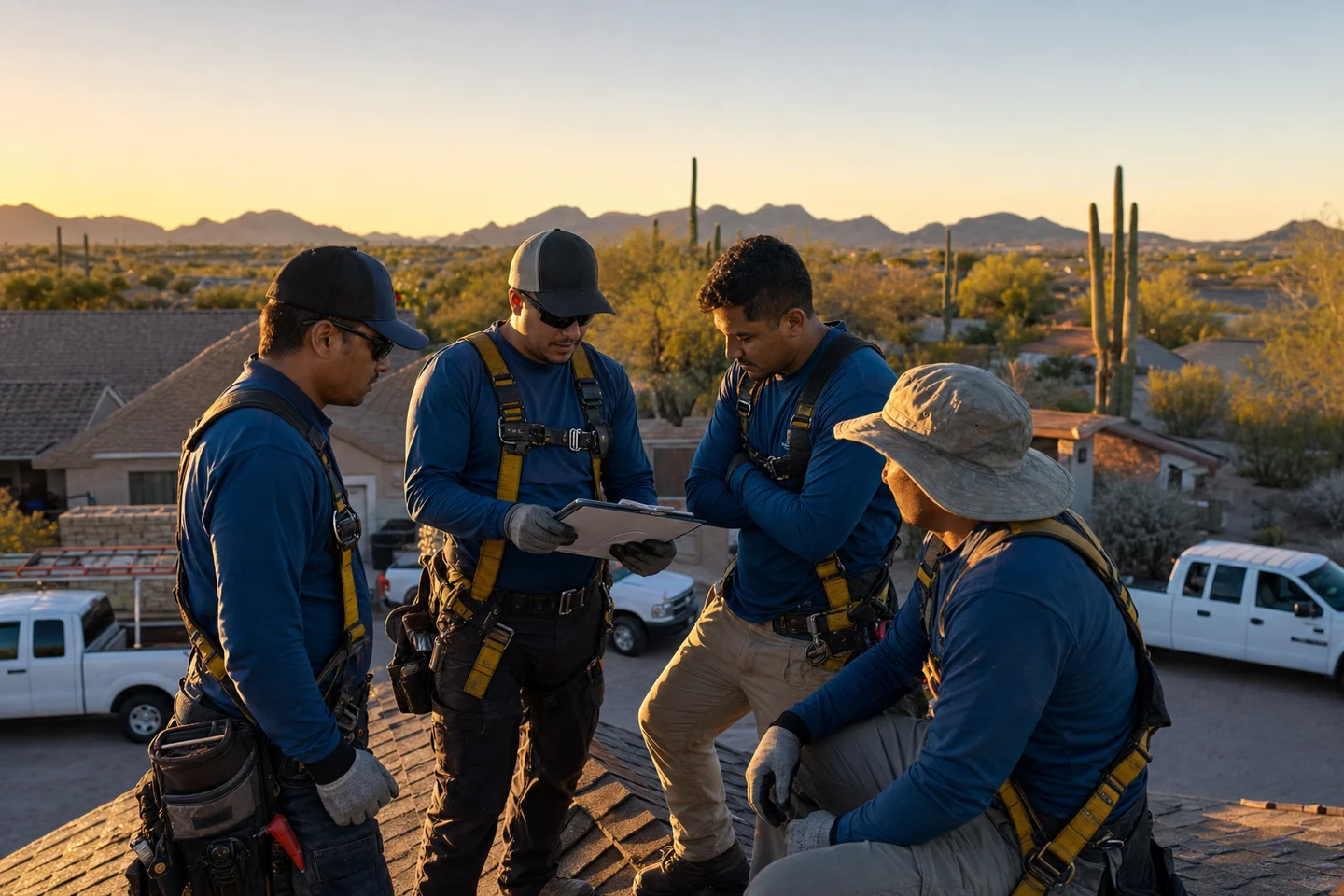
Safety comes first because every claim you prevent is a claim that never touches your loss history or experience modification factor (EMR). Focus on the injuries that hit Arizona roofers hardest: falls, lifting and back strains, nail-gun accidents, and heat stress. Build short, regular toolbox talks around those topics. Keep them practical—five to ten minutes at the start of the day on ladder setup, harness checks, spotters on the ground, hydration breaks, and bundle handling. Use simple sign-in sheets so you can show underwriters and auditors that these meetings really happen.
Pair toolbox talks with written checklists that foremen can actually use. A pre-job checklist might include ladder tie-off, anchor point installation, harness inspection, debris containment, and a quick review of where crews will stage materials. An end-of-day checklist might cover clean-up, nail and debris sweep, and a final walkthrough with the customer or GC. When those steps are written down and repeated, you get fewer surprises—and fewer calls that turn into claims.
Next, connect your safety work directly to a basic return-to-work plan. When a roofer is injured, the clock starts ticking. The longer they stay off the job entirely, the more expensive the claim becomes and the less likely it is that they come back at all. By lining up light-duty tasks in advance—yard cleanup, warehouse work, vehicle inspections, harness and ladder checks, photo documentation of completed roofs—you can bring people back to medically appropriate work as soon as their doctor allows it. Arizona-focused workers comp explainers such as this construction workers comp guide and light-duty resources like this light-duty article help you understand the guardrails; your job is to apply them to realistic roofing tasks.
Documentation ties everything together. For every incident, capture what happened, what immediate steps you took, where the employee received care, and what restrictions the doctor ordered. Keep a simple form that records any light-duty assignment, schedule, and follow-up appointments. Store those records alongside your safety meeting notes, jobsite photos, and subcontractor certificates. When your carrier and auditors can see clean, consistent documentation, it becomes much easier to negotiate, defend your classification splits, and tell a positive story about how you manage risk on Arizona roofs.
FAQ: Arizona roofing workers comp, light duty, and audits
Even a well-designed workers compensation program for Arizona roofers will drift if you treat it as a set-and-forget purchase. Crews change, revenue grows, your mix of residential and commercial work shifts, and you may lean more or less on subcontractors from one monsoon season to the next. To keep costs predictable, you need a simple rhythm for audits, reviews, and ongoing compliance.
Start by planning for the audit before the policy ever renews. About 90 days before renewal, sit down with your advisor to compare last year’s actual payroll by class code to what you projected. If you plan to add a repair division, expand into more commercial work, or bring a previously subcontracted crew in-house, update your estimates now. Mid-term, do a second check-in: if your payroll is running 20–30% ahead of projections, consider adjusting the policy so you spread any extra premium across the remaining months instead of taking a big hit at audit.
When the audit notice arrives, be organized. Keep a digital folder with:
- Payroll reports broken out by role (on-roof, clerical, sales, warehouse, drivers)
- Up-to-date workers comp certificates for every subcontractor
- Job descriptions explaining who does what
- Safety meeting agendas and sign-in sheets
- Incident reports and return-to-work records for any significant claims
Resources like this Arizona audit guide and this class-code explainer show how much easier audits go when your documentation is tight. That same documentation also helps underwriters understand your business, which can open doors to more competitive roofing-friendly carriers over time.
Finally, treat serious injuries as a feedback loop, not just bad luck. After a major claim, ask three questions with your leadership team: What did our policy cover well? What slowed down the claim or made it more expensive? What needs to change in our safety training, light-duty options, or subcontractor strategy so we are less likely to repeat this? Use local roofing-specific content such as this Arizona roofing workers comp guide as a benchmark, then update your internal playbook accordingly.
FAQ: Arizona Roofing Workers Comp, Light Duty, and Audits
Q: Is workers compensation insurance required for Arizona roofing companies?
A: In almost all cases, yes. If you have one or more employees, Arizona generally requires you to carry workers compensation coverage. Many GCs and commercial property owners will also demand proof of coverage before putting you on a job.
Q: How can I keep a workers comp audit from turning into a surprise bill?
A: Keep payroll estimates realistic, separate on-roof labor from lower-risk roles, and collect workers comp certificates for every subcontractor. Reviewing your numbers mid-term and updating the policy when things change is far safer than waiting for the audit.
Q: What does a light-duty or return-to-work program look like for roofers?
A: Common light-duty options include warehouse and yard work, harness and ladder inspections, vehicle checks, photo documentation, and helping supervisors with paperwork. The key is matching tasks to the doctor’s restrictions and documenting everything.
Q: Will better safety and return-to-work planning really lower my premiums?
A: Over time, yes. Fewer and smaller claims improve your loss history and experience modification factor (EMR). That can open access to better carriers and more stable pricing for Arizona roofing accounts.
Q: Where can I learn more about Arizona workers comp rules for roofers?
A: State-level explainers like this workers comp guide and roofing-specific content such as this Arizona roofing workers comp article are good starting points before you fine-tune details with a roofing-focused advisor.