
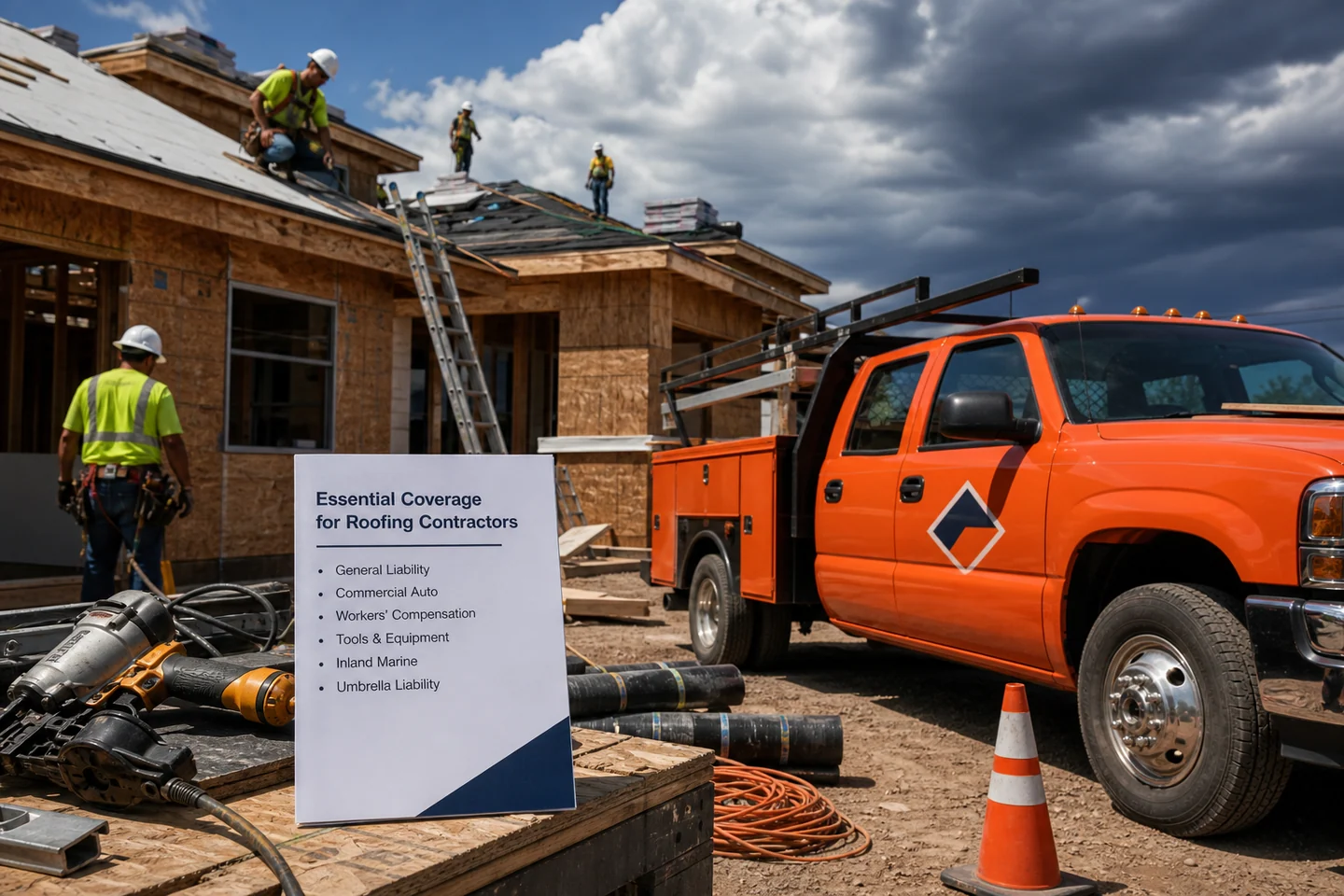
If you run a roofing company anywhere from Phoenix to Mesa, Gilbert, Queen Creek, or Scottsdale, you already know roofing is one of the highest-risk trades in Arizona. Crews work two and three stories up in 115-degree heat, monsoon storms create a surge of demand and rushed jobs, and a single fall or water-intrusion claim can wipe out a season of profit. The right roofing contractor insurance in Arizona is what keeps one bad day from ending your business. This guide breaks down exactly what coverage Phoenix-area roofers need, what drives your premium, and how to keep your program affordable in a hard insurance market.
Why Arizona Roofers Pay More for Insurance
Insurance carriers rate roofing as a "high-hazard" class of business, and Arizona's climate makes it tougher. Extreme summer heat raises the risk of heat-related worker injuries and equipment failure. Monsoon season brings a wave of emergency tear-offs and repairs — and with rushed timelines come more accidents and more water-damage claims. On top of that, fewer carriers want to write roofers at all, which means less competition and higher rates. The result: roofers consistently pay some of the highest premiums of any trade. The good news is that a well-structured program, clean safety record, and the right broker can dramatically narrow that gap.
General Liability Insurance for Roofers
General liability (GL) is the foundation of every roofing contractor's program. It can cover third-party bodily injury and property damage, subject to the policy terms and exclusions — for example, a dropped bundle of shingles that damages a customer's car, or water that gets in during a tear-off and ruins a homeowner's ceiling and drywall. Most Arizona general contractors, property managers, and commercial clients won't let you on the job without proof of GL, and many require limits of at least $1 million per occurrence and $2 million aggregate.
Roofers should pay close attention to exclusions. Some policies carve out roofing performed above a certain height, hot-tar or torch-down work, or open roof conditions. If your policy excludes the work you actually do, you're paying for coverage that won't respond to a claim. This is exactly the kind of gap a roofing-specialized broker catches before it costs you.
Workers' Compensation — Required in Arizona
Arizona law requires nearly every employer to carry workers' compensation insurance, even if you have just one part-time employee. For roofers, workers' comp is usually the single largest insurance cost because of the high injury rate associated with falls and heat exposure. Your premium is driven by payroll and your experience modification rate (your "mod"), which reflects your past claims history.
Two things matter here. First, misclassifying roofing payroll as a lower-risk class is a common mistake that triggers expensive audit bills and can even be considered fraud. Second, a strong safety program — fall protection, heat-illness prevention, documented training — can reduce injuries and claims; future experience modification factors and premiums also depend on the rating rules and other factors. If you use subcontractors, make sure they carry their own coverage, or their payroll can be added to your audit.
Commercial Auto and Fleet Coverage
Commercial auto insurance can address liability and selected physical-damage risks for work vehicles. Review vehicle ownership, drivers, towing and business use with your agent to determine the appropriate coverage. Ask about hired and non-owned auto liability if employees use rented or personal vehicles for work. See Progressive’s commercial versus personal auto guidance.
Tools, Equipment, and Inland Marine
Compressors, nail guns, ladders, harnesses, and material on the truck or job site usually aren't covered by your auto or GL policy. Inland marine (contractor's equipment) coverage protects your tools and equipment whether they're on a job, in transit, or stolen overnight — a real risk on open Arizona job sites. For a relatively low premium, this coverage keeps a stolen trailer of tools from stopping your crews cold.
Excess Liability and Umbrella Policies
Larger commercial and municipal jobs frequently require $2 million, $5 million, or more in total liability limits. An umbrella or excess liability policy stacks on top of your GL and auto limits so you can qualify for bigger contracts without buying separate high-limit policies. For growing Arizona roofers chasing commercial and new-construction work, an umbrella is often the difference between bidding a job and watching it go to a competitor.
Arizona ROC License and Bond Requirements
Licensed roofing contractors in Arizona must register with the Arizona Registrar of Contractors (ROC) and maintain a contractor license bond. The bond protects your customers, not you — it's separate from your liability insurance, and the bond requirement is separate from liability coverage a customer may require by contract. Many clients will ask for your license number, your bond, and a certificate of insurance before signing. Having all three ready and accurate speeds up your bids and signals professionalism.
How Much Does Roofing Insurance Cost in Arizona?
There's no single number — premiums depend on your payroll, revenue, years in business, claims history, the type of roofing you do (residential vs. commercial, steep vs. low-slope, torch-down vs. shingle), and the limits you carry. A small residential roofer's program looks very different from a commercial outfit running multiple crews. The most reliable way to control cost is to work with a broker who specializes in contractors, shops your account across multiple carriers, and structures the program around the work you actually perform.
Frequently Asked Questions
Is workers' comp required for roofers in Arizona?Yes. Arizona requires workers' compensation for virtually all employers, including roofing companies with even one employee.What insurance do I need to get hired as a subcontractor in Phoenix?Most general contractors require general liability (commonly $1M/$2M), workers' compensation, and commercial auto, plus a certificate of insurance naming them as additional insured.Does general liability cover roof leaks I'm blamed for?It depends. Resulting water damage to a customer's property may be covered, but faulty workmanship itself often is not. Exclusions vary widely.How can I lower my roofing insurance premium?Maintain a clean claims history, run a documented safety program, classify payroll correctly, and work with a broker who markets your account to multiple carriers.Get a Roofing Insurance Quote from PrimeRisk
At PrimeRisk Insurance Solutions, we specialize in insuring Arizona contractors — including roofers across the Phoenix metro, the East Valley, and statewide. We know which carriers actually want roofing risks, how to review your program for exclusions and potential gaps, and how to keep your costs competitive. Call us at 480-613-8387 or visit www.primeriskinsurance.com for a fast, no-pressure quote.
This article is for general informational purposes only and does not constitute insurance advice. Coverage terms, conditions, and availability vary. Contact a licensed agent to discuss your specific situation.