
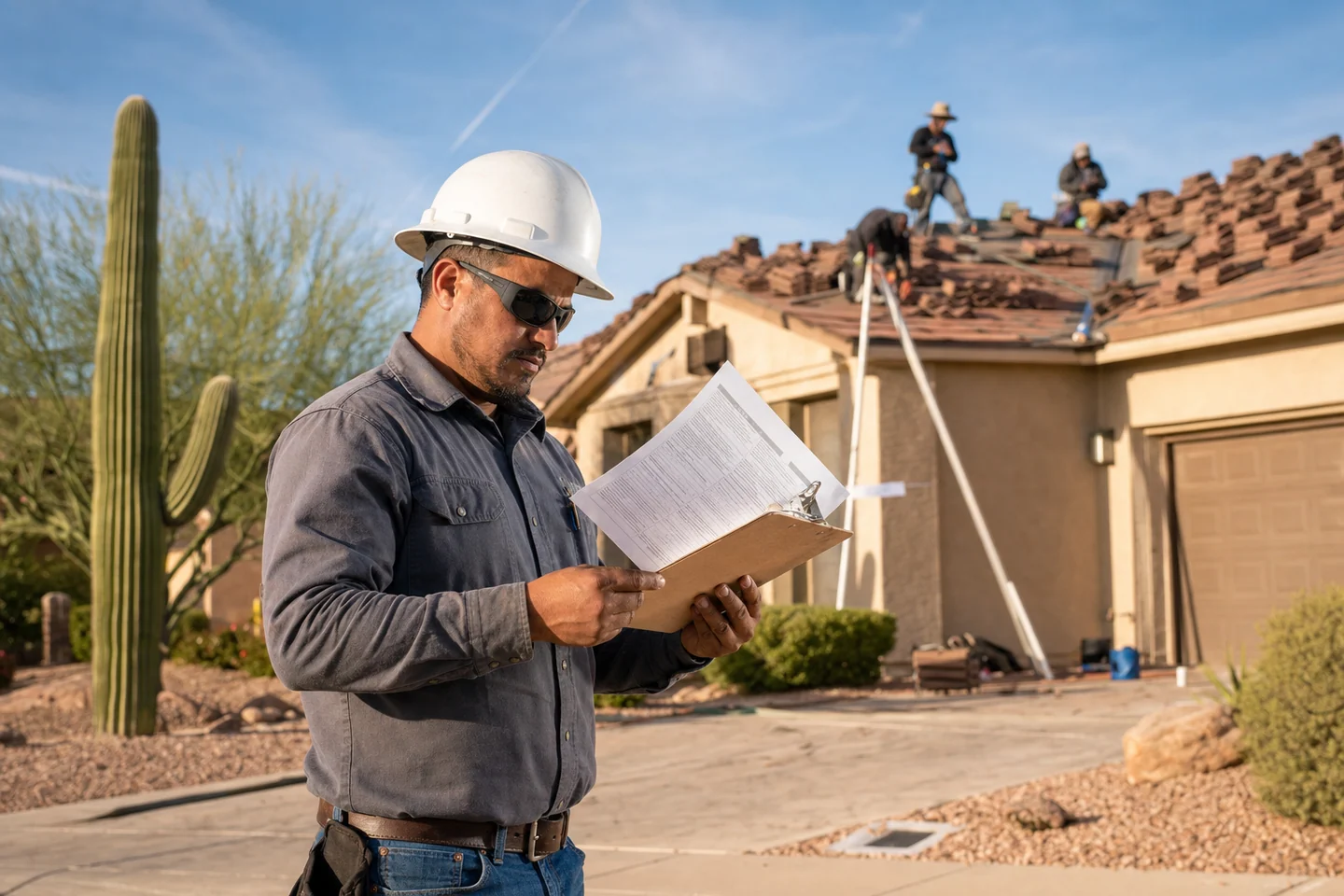
Arizona roofers can avoid costly GL gaps by spotting exclusions before claims hit.
Why roofing GL exclusions create claim trouble in Arizona
For Arizona roofing contractors, general liability insurance is supposed to be the policy that protects the business when a claim follows your work. But for many roofers, the real danger is not having no policy. It is having a policy that looks strong on the certificate and weak inside the wording.
This matters because roofing claims are rarely simple. A small installation mistake can become interior water damage. A tear-off can lead to property damage or debris complaints. A completed roof can trigger a dispute months later when a homeowner, HOA, or property manager says your work caused a leak. In those moments, the policy language matters far more than the premium you saved.
Construction coverage specialists have been warning for years that contractor liability policies increasingly include restrictive endorsements. IRMI’s article on coverage-restricting endorsements explains how insurers often narrow contractor protection around residential work, multi-family projects, additional insured status, and completed operations. For Arizona roofers, those are not fringe issues. They are core parts of everyday business.
Roofing is especially vulnerable because many claims involve work that looked fine when the crew left but produced damage later. IRMI’s analysis of CGL exclusions involving defective work shows how exclusions can shape whether a claim is defended, limited, or denied. That means a roofer can think they bought protection for leaks, property damage, and completed work disputes, only to find out the policy cuts back exactly where the risk begins.
In Arizona, this becomes even more important because roofers often work on a mix of single-family, HOA, condo, and light commercial properties. A policy that works reasonably well for one class of work may create dangerous gaps for another. Some insurers also attach specific restrictions for multi-unit residential work in Arizona and other western states, which shows how closely this market is watched.
The takeaway is simple: the real question is not whether your roofing company has general liability. The real question is whether your general liability still covers the kind of roofing jobs you actually do. If you want fewer claim surprises, stronger certificates, and a cleaner insurance program, understanding exclusions is one of the smartest places to start.
How to review roofing policies, endorsements, and job contracts
Once you understand why roofing exclusions matter, the next step is learning how to review a policy the same way you review a contract or estimate. Most Arizona roofing owners do not need to become coverage attorneys. They do need to know where the dangerous wording usually hides.
Start with the declarations and coverage forms, then move quickly to endorsements. Endorsements often change the standard policy more than the base form does. This is especially important in construction because carriers regularly add restrictions tied to residential work, condos, multi-family jobs, subcontracted work, and completed operations. IRMI’s analysis of construction defect coverage restrictions shows how common these endorsements have become in the contractor market.
As you review a roofing GL policy, slow down around these items:
- Residential or tract-home exclusions
- Townhome, condo, or multi-family exclusions
- Height limitations or slope restrictions
- Subcontracted work exclusions
- Open-roof or water-intrusion limitations
- Completed-operations restrictions
Each one can matter depending on the jobs you pursue. A policy that looks affordable may be almost useless if your company mainly installs roofs for HOAs, apartment owners, or multi-building communities around Phoenix and the East Valley.
It is also smart to compare your policy wording to your contracts. If a GC or property manager requires completed-operations coverage, additional insured status, and waiver wording, but your policy has exclusions that undercut the work itself, your certificate may satisfy the paperwork requirement while still leaving the claim exposed. That is a dangerous mismatch.
Another practical review step is to look at how your company uses subcontractors. Roofing businesses that scale fast often rely on outside crews. But if your GL policy restricts subcontracted work, or if your files are weak, that can create a problem at claim time. IRMI’s article on the subcontractor exception to the completed work exclusion shows why the details matter so much. Some policies and endorsements preserve important protection, while others chip it away.
To make policy review easier, build a simple annual checklist. Pull your largest contracts, your current COI requirements, your strictest project types, and your last set of policy forms. Then ask one practical question for each item: if we had a leak claim, property damage claim, or completed-operations dispute on this kind of job, would our policy still fit the work? That one habit can save Arizona roofers from buying coverage that only looks good until the first serious claim arrives.
FAQ: Arizona roofing GL exclusions and claim traps
Arizona roofers do not need a perfect policy to protect their business. They need a policy that honestly matches the work they perform, the contracts they sign, and the crews they use. That is the real goal.
The easiest way to improve claim outcomes is to treat insurance review as part of job planning, not just renewal paperwork. Before you take on a new category of work, ask whether your GL still fits. If you move from single-family reroofs into HOA, condo, or light commercial projects, your exposure changes immediately. If your insurer is not comfortable with that work, the time to discover it is before the first certificate goes out.
It also helps to tighten your documentation. Keep digital copies of:
- Current GL policy forms and endorsements
- Umbrella and excess liability forms
- Subcontractor agreements
- Certificates of insurance from all subs
- Contracts with your toughest insurance requirements
That file makes renewals cleaner and claims easier to defend.
When reviewing quotes, do not focus only on price. Ask why one quote is cheaper. In many contractor programs, the lowest premium comes from the heaviest restrictions. A policy can look competitive right up until a claim hits a class of work that has been carved out. This is exactly why construction specialists keep warning contractors to read beyond the declarations page.
Finally, use every claim or near-miss as feedback. If your company sees repeated water-intrusion complaints, disputed scope issues, or subcontractor documentation gaps, those are signals to tighten operations and insurance together. Better files, better job controls, and better policy review all support each other.
FAQ
What is the most common GL problem for Arizona roofers?
Coverage that looks broad at first glance but contains exclusions for the exact work the company performs.
Do completed-operations exclusions matter after the job is done?
Yes. Many roofing claims happen after installation, especially leaks and property damage disputes.
Can subcontracted roofing work create coverage problems?
Yes. If your policy limits subcontracted work or your files are weak, claims can become much harder to defend.
Why is a cheap roofing GL quote sometimes risky?
Because lower pricing often comes with tighter exclusions that may remove protection for residential, multi-family, or completed work.
How often should a roofing company review GL exclusions?
At least annually and any time project types, contracts, or subcontractor usage change.