
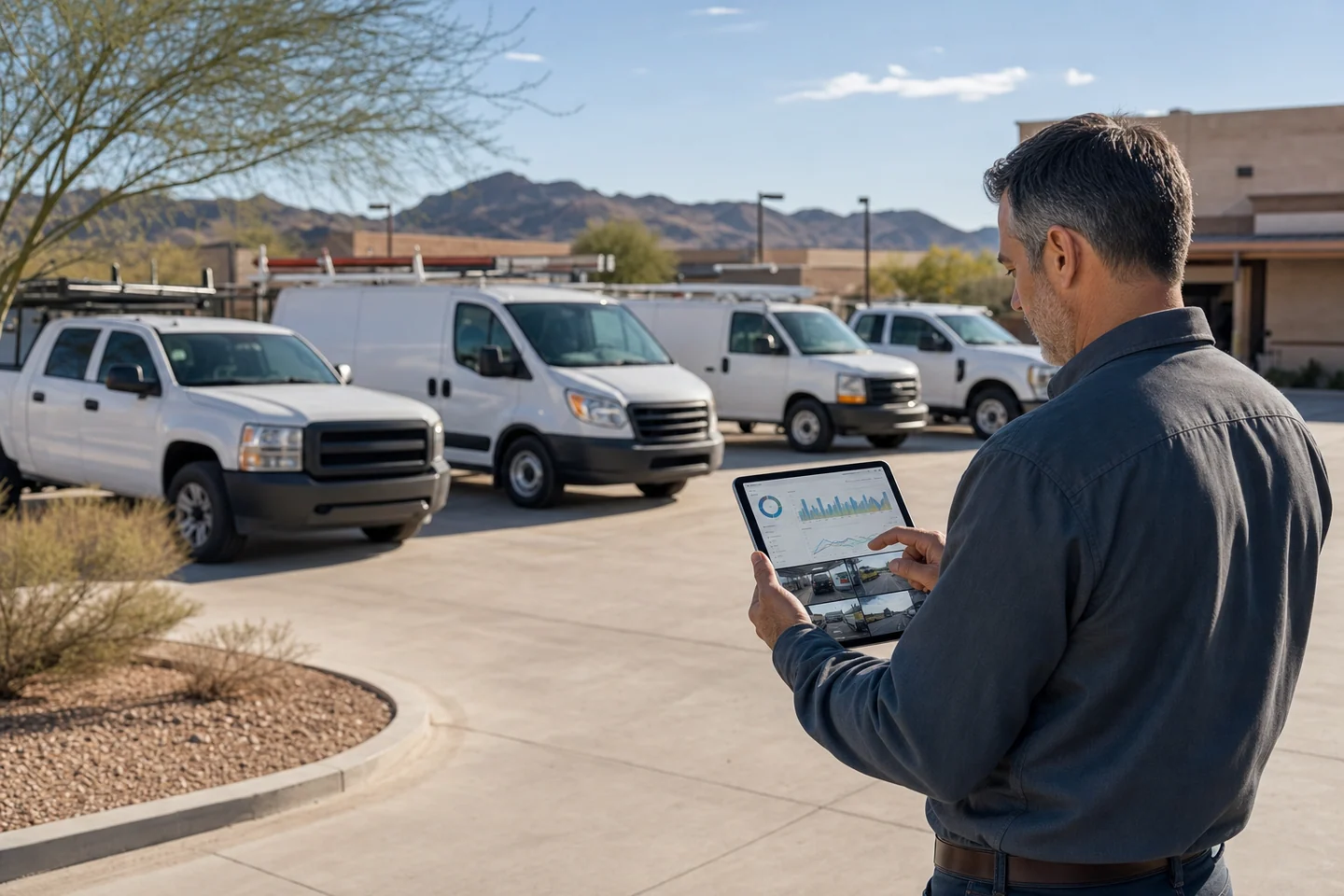
How contractors can use dash cams and telematics to reduce crashes, clean up claims, and improve commercial auto outcomes.
Why dash cams and telematics matter for contractor fleets
For contractors, commercial auto claims often feel like they start with the vehicle. A sideswipe in traffic, a rear-end collision on the way to a job, or a backing accident in a crowded lot looks like a truck problem on the surface. But many fleet losses turn into bigger insurance problems because the company cannot clearly show what happened, how the driver was operating, or whether unsafe habits were developing before the crash.
Current research from the Insurance Institute for Highway Safety shows why this matters. IIHS reported in New report provides road map for fleets to roll out anti-speeding tech that one fleet using active intelligent speed assistance saw a 30% reduction in preventable collisions. The related Volpe and IIHS report at Intelligent speed assistance in fleet management explains that fleets using speed-related monitoring and control tools reported fewer speeding violations and other downstream safety benefits.
For contractors, that lesson is highly practical. Work trucks and vans are rarely driven in calm, predictable conditions. Employees move between jobsites, haul tools, reverse in tight spaces, answer calls from the field, and squeeze multiple stops into one day. When a claim happens, the contractor may face not only repair costs but also disputed fault, higher premiums, downtime, and a tougher renewal conversation. Dash cams and telematics can help because they create better visibility into driving behavior before and after an event.
This topic fits PrimeRisk well because it turns insurance into a business process. The question is not just whether a contractor has commercial auto coverage. The better question is whether the company has enough visibility to prevent avoidable losses and explain what happened when a claim occurs. That is where dash cams and telematics become more than gadgets. They become risk-control tools.
Dash cam, telematics, and coaching habits that reduce disputes
Once a contractor sees why dash cams and telematics can influence claim outcomes, the next step is using them in a way that drivers and managers can actually support. Too many fleets install devices, create tension with employees, and then fail to build a practical coaching process around the data. The best results usually come when the company treats these tools as safety and documentation systems, not just surveillance tools.
The IIHS and HLDI research compendium at Compendium of HLDI collision avoidance and Level 2 automation research notes that many collision avoidance technologies are associated with statistically significant reductions in claim frequencies under several coverage types. While dash cams are different from automatic braking or blind spot alerts, the larger lesson still matters. Better visibility into driving behavior, stronger warnings, and documented vehicle events can support fewer preventable losses when the tools are paired with clear fleet expectations.
For contractors, telematics and dash cams become most useful when they are built into a simple fleet routine. A practical process should usually include:
- Driver onboarding: explain what the equipment records, why it is being used, and how the company reviews events.
- Clear triggers: define which events lead to coaching, such as speeding, hard braking, distracted driving indicators, or repeated backing incidents.
- Regular review: schedule short manager reviews instead of waiting until renewal or after a crash.
- Exoneration use: save and organize footage that can quickly show when the company driver was not at fault.
- Privacy boundaries: use written expectations so drivers know how footage and telematics data are handled.
It also fits PrimeRisk’s straightforward brand voice. Arizona contractors want simple guidance that protects trucks, crews, and schedules without turning every insurance discussion into legal jargon. A clean section on coaching, documentation, and expectations makes the topic easier to act on and less likely to feel like generic fleet advice.
Most importantly, this process helps the business respond with facts. If a driver is accused of causing an accident, if a customer disputes a backing event at a jobsite, or if the company wants to show a carrier it is taking commercial auto seriously, clear footage and usable telematics trends can give management a far better position than memory alone. That is why the technology matters. It is not just installed equipment. It is claim support.
Annual fleet review checklist and FAQ for stronger auto results
Contractors do not need a massive transportation department to get value from dash cams and telematics. They need one repeatable process that fits service trucks, pickups, vans, and supervisors moving between jobsites every day. The strongest place to start is an annual fleet review that combines driver expectations, event trends, and claim history before renewal discussions begin.
A practical annual review should include:
- Listing every vehicle with dash cam or telematics capability
- Reviewing the most common alerts, speeding patterns, and backing events
- Checking whether new drivers received clear training on fleet technology
- Saving examples where footage helped resolve or defend a claim
- Comparing loss trends to the company’s commercial auto goals and insurance strategy
FAQ
Do dash cams really help contractor commercial auto claims?
Yes. They can help show what happened during an accident, support faster investigations, and sometimes defend a driver who was not at fault.
What does telematics track for a contractor fleet?
It can track events such as speeding, harsh braking, acceleration, route patterns, and sometimes idling or location history depending on the system.
Will drivers push back on these tools?
Sometimes. Clear communication about safety, coaching, and fair data use makes adoption much easier than rolling the tools out with no expectations.
What is one simple first step for a contractor?
Choose a small group of vehicles, define the event types you want to review, and build a short monthly coaching routine around them.
How often should a contractor review this exposure?
At least annually and any time the fleet grows, new drivers are added, or minor accidents start appearing more often.