
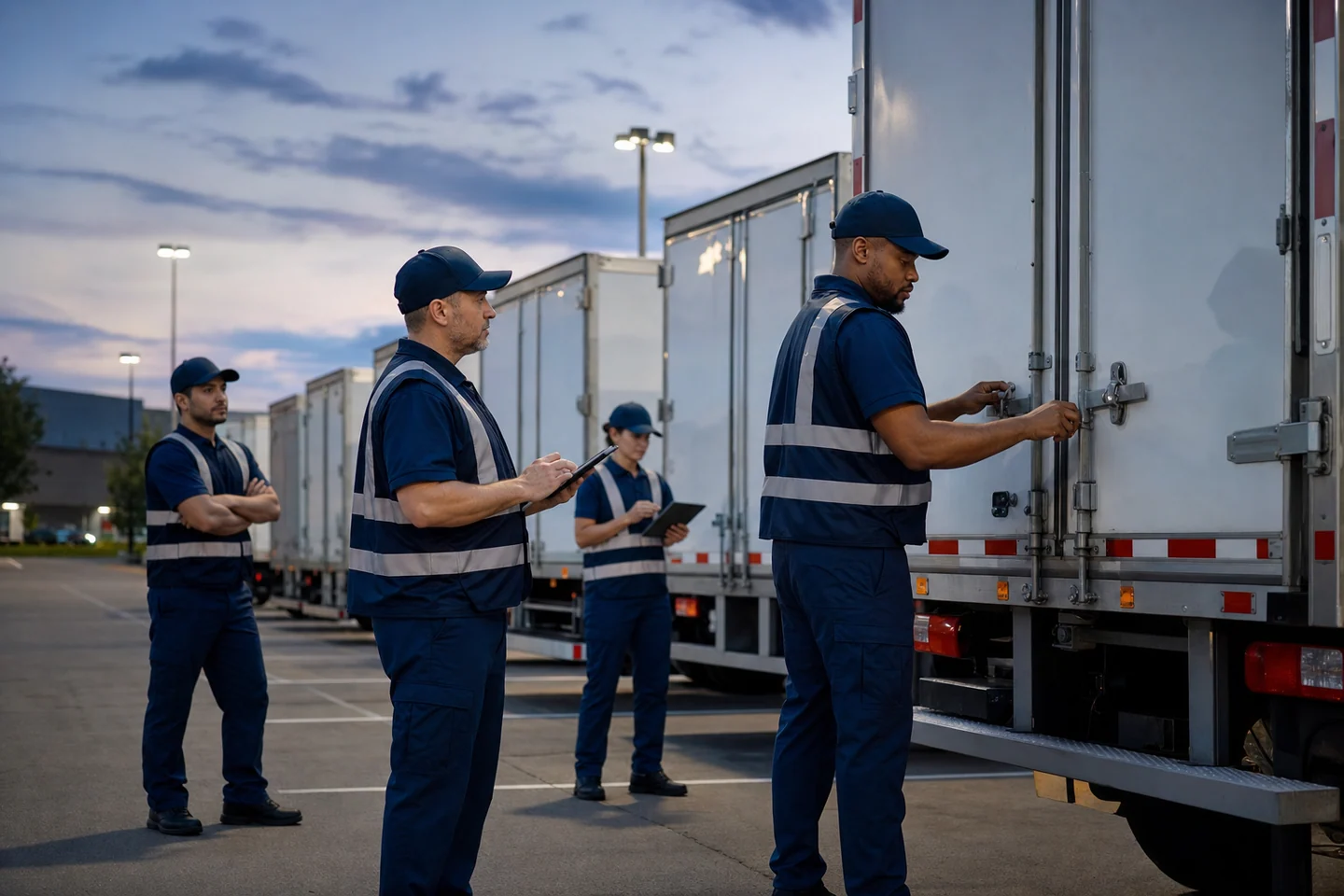
Show movers how truck security, inventory controls, and overnight parking affect theft-related claims.
Why overnight truck holds create harder moving claims
For moving companies, some of the most difficult claims do not start with broken furniture or scratched walls. They start when customer property sits on a loaded truck overnight, changes hands between crews, or disappears during a stretch of the move that feels ordinary to the company but stressful to the customer. When that happens, the issue quickly becomes more than a service complaint. It becomes an insurance, documentation, and trust problem all at once.
FMCSA's cargo insurance requirement FAQ explains that household goods carriers are required to carry cargo insurance, which immediately ties shipment custody to the mover's broader risk picture. FMCSA's Guidance Q&A on valuation and insurance also reinforces that movers must provide valuation options and that customers often need help understanding protection choices. For movers, that means the claim story is shaped not only by what coverage exists, but also by how well the company controlled the shipment in the first place.
The practical risk is easy to understand. A truck may be parked overnight between loading and delivery. A trailer may sit while schedules shift. A crew may unload part of a shipment while another part remains sealed. A key may be shared too loosely. In any of those moments, an unexplained loss can become very difficult to sort out unless the company can show exactly where the shipment was, who had access, and what controls were in place.
For PrimeRisk's audience, this topic matters because straightforward insurance guidance should connect directly to real operating decisions. Overnight security is one of those decisions. It is where route planning, customer expectations, and claim defensibility all meet.
Parking, inventory, and handoff controls that reduce theft disputes
Once a moving company understands why theft creates a different kind of claim pressure, the next step is tightening the parts of the job where property becomes hardest to track. The biggest problems often do not happen while items are actively being carried into the home. They happen during staging, overnight parking, trailer storage, or handoffs between crews. That is where good intentions are not enough. The move needs a visible control process.
FMCSA's Understanding Valuation and Insurance Options explains that movers are liable for the value of the goods they transport and that customers should understand the level of protection selected. FMCSA's Have you discovered Loss and/or Damage to your Household Goods Shipment? also shows how quickly the post-loss process becomes a documentation exercise involving item lists, photographs, and claims support. For movers, that means better theft prevention and better records go hand in hand.
A practical overnight-security workflow should usually include:
- Secure parking selection: choose well-lit, controlled areas whenever a loaded truck must sit overnight.
- Lock and seal checks: document door locks, seal condition, and trailer status before drivers leave the vehicle.
- Inventory verification: confirm which high-value or easy-to-resell items are on board before and after each overnight hold.
- Key control: define who holds keys, who can move the vehicle, and how spare access is managed.
- Handoff documentation: record when one crew, driver, or facility transfers responsibility to another.
- Immediate incident steps: know who to contact first if a seal is broken, a lock is damaged, or an item count is off.
For PrimeRisk's audience, this section is especially useful because it translates insurance into truck-yard and route-planning decisions. Better parking and handoff controls do not just reduce loss. They also reduce customer stress, speed up investigations, and protect the company's reputation when a shipment sits in transit overnight.
Annual review checklist and FAQ for cleaner moving claims
Moving companies do not need a complicated security department to improve this exposure. They need one repeatable overnight-truck checklist and one annual review of where theft-related confusion tends to start. The best place to begin is with loaded-truck parking, seal checks, and responsibility handoffs, because those are the moments when a shipment can become hardest to defend.
A practical annual review should include:
- Reviewing prior loss, theft, and unexplained inventory complaints
- Refreshing parking, locking, and seal-verification procedures
- Rechecking documentation standards for high-value items and overnight holds
- Training supervisors on who escalates a suspected theft issue and how quickly
- Comparing theft-related claim patterns to the company's current cargo and liability strategy
FAQ
Why does overnight truck security matter so much for moving companies?
Because theft or unexplained loss often becomes much harder to investigate once a loaded vehicle sits unattended between pickup and delivery.
Is this only about expensive items?
No. Even ordinary household goods can create major customer complaints and claim costs if inventory control breaks down.
What is one simple first step for a mover?
Use one overnight-hold checklist that confirms parking location, lock status, seal condition, key control, and item verification.
Why do handoff records matter so much?
Because clear responsibility at each transfer point makes theft investigations and claim reviews much easier to manage.
How often should a moving company review this exposure?
At least annually and again whenever overnight holds, long-haul routes, or unexplained loss complaints start increasing.