
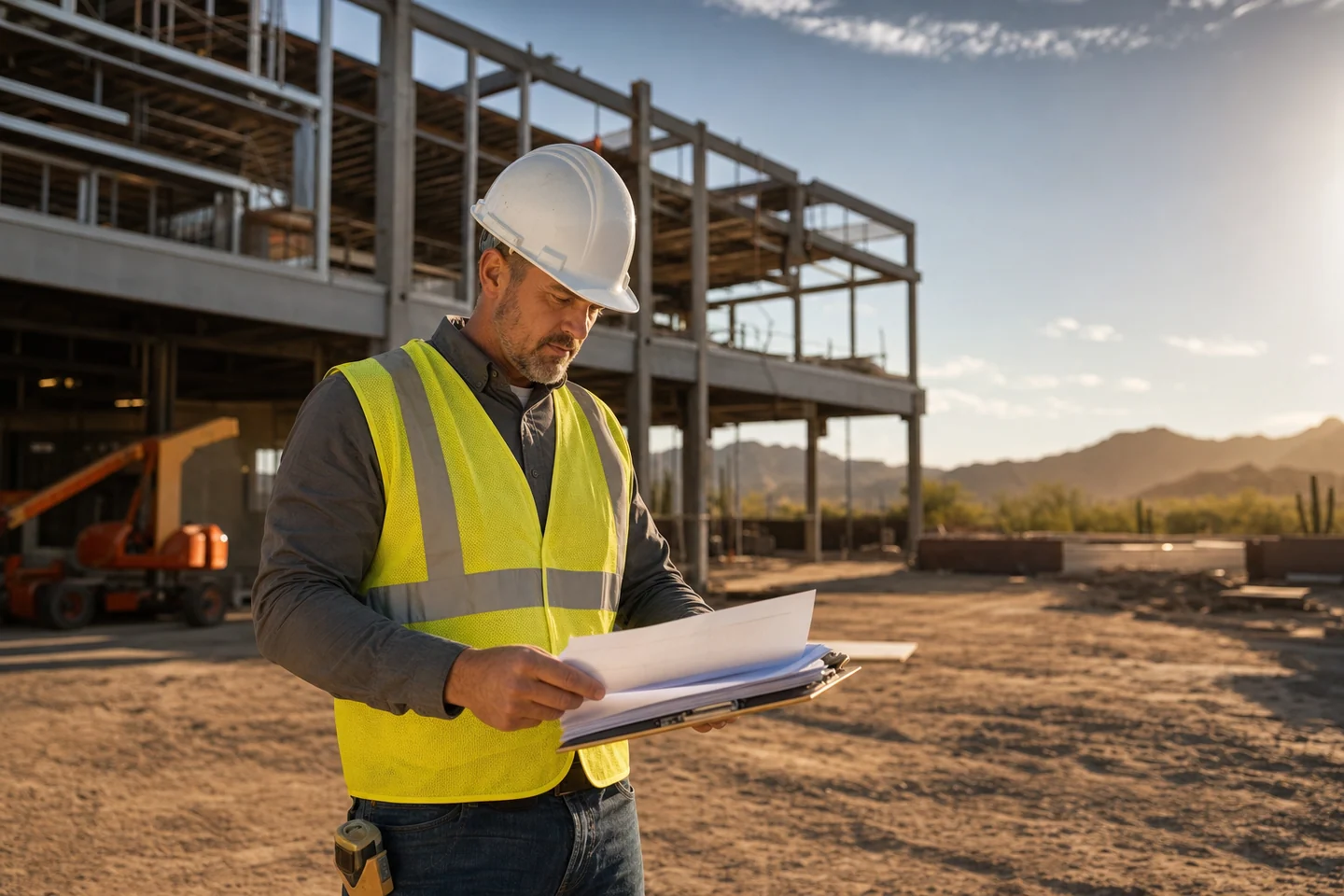
Show Arizona contractors how builder's risk protects jobs, materials, and timelines before losses stall the project.
Why builder's risk matters on Arizona construction jobs
For Arizona contractors, a project can be profitable on paper and still turn into a financial headache if property damage hits before the job is complete. Materials can be stolen. Wind can tear through exposed work. Fire can damage partially finished structures. A loss during construction does not just create repair costs. It can throw off schedules, upset owners, and squeeze cash flow when crews and suppliers still need to be paid.
That is why builder’s risk insurance deserves more attention. Many contractors focus first on general liability, commercial auto, and workers compensation because those are the coverages discussed most often. But builder’s risk protects a very different part of the operation: the job itself while it is being built, renovated, or installed.
Travelers explains on its builder’s risk overview that this coverage is designed to protect construction projects against damage to covered property during the course of construction. The Hartford notes in its article on builder’s risk coverages and exclusions that it can help pay repair costs when buildings under construction are damaged by events such as fire, theft, hail, vandalism, or other covered causes of loss.
For Arizona contractors, this matters because projects are exposed in ways completed buildings are not. Materials may be stored outside. Equipment and supplies may sit on-site overnight. A structure may be partially enclosed for weeks. Even smaller trade contractors can be financially exposed if a project owner expects them to carry an interest in the job or protect materials before installation.
Builder’s risk is also valuable because it helps contractors think in project terms rather than only company terms. If a theft or weather event delays the job, the loss can affect labor sequencing, subcontractors, owner expectations, and final payment. That makes builder’s risk more than a technical insurance product. It is part of keeping the project moving.
What builder's risk should cover on Arizona jobs
Once a contractor understands why builder’s risk matters, the next step is making sure the policy actually fits the project. This is where many Arizona contractors get tripped up. They know they need protection for a job under construction, but they are less clear on what property is covered, when coverage begins and ends, and what delays or extra costs may still fall back on the business.
Travelers explains in its overview of builder’s risk insurance that the policy generally covers projects under construction against the cost to repair or replace materials at the covered structure after events such as fire, wind, theft, collapse, lightning, hail, explosion, or vandalism. The scope can also extend to materials in transit or awaiting installation, depending on the policy and project setup. That is why builder’s risk is so important for Arizona contractors who stage materials off-site, receive deliveries in phases, or leave materials secured at the job before installation.
The Hartford’s discussion of builder’s risk coverages and exclusions adds another practical point: many policies protect the physical project, but consequential losses are often limited or excluded unless added through extensions. For example, a severe storm loss may be covered as direct damage, but the extra cost tied to project delay, rescheduling crews, or acceleration pressure may need special attention.
A practical Arizona review should break the exposure into clear categories:
- Structure under construction: the building or renovation work itself.
- Materials and supplies: items on-site, in temporary storage, or in transit.
- Temporary works: fencing, scaffolding, signs, and similar items if included.
- Soft costs and delays: permit fees, financing costs, or other project expenses that may need tailored limits.
This is where contractor operations matter just as much as the declarations page. A builder’s risk policy should reflect who owns the project interest, whether the job is ground-up or renovation, whether occupancy begins before completion, and how materials move through the project timeline. If those details are fuzzy, the policy can look broad while still missing the exact loss that would hurt cash flow most.
The smartest approach is to match the policy to the most believable bad day. If a theft, fire, or storm hit the job this month, what property would be damaged, what extra costs would follow, and would the policy still line up with the way the project is actually being built? That question usually leads to a much better builder’s risk review than simply asking for a quote.
FAQ and annual builder's risk review
Arizona contractors do not need a complicated system to make builder’s risk more effective. They need a repeatable review process that starts before materials arrive and continues until the project is complete. That matters because builder’s risk is most valuable when it reflects the actual life of the job instead of an estimate made at the very beginning.
Start with a short pre-job checklist:
- Who should be named on the policy based on contract structure?
- What is the full completed value of the project?
- Will materials be stored off-site, in transit, or in temporary locations?
- Are there delay, soft-cost, or permission-to-occupy issues to review?
- Does the job involve renovation exposure that increases loss complexity?
Travelers’ broader construction resources at its inland marine construction insurance page reinforce that property in construction can move between job sites, storage, and transit, which is why a project-based view matters so much. Arizona contractors should also revisit builder’s risk when major change orders, longer schedules, or shifts in occupancy happen mid-project. A policy built for one set of assumptions can become outdated fast.
This topic works especially well for PrimeRisk because it expands contractor content beyond general liability, auto, COIs, and workers comp into the property side of project protection. It also aligns with the agency’s blue-collar contractor audience by focusing on practical project risk, not abstract policy language. Roofers, general contractors, and trade contractors all face the same core question: if a job is damaged before completion, who absorbs the hit?
Builder’s risk is often overlooked until a lender, owner, or claim forces the conversation. But the best time to review it is before the first delivery, not after a loss stalls the schedule.
FAQ
What does builder’s risk insurance usually cover?
It usually helps cover buildings under construction plus certain materials, supplies, and related property after covered causes of loss.
Does builder’s risk cover materials before they are installed?
Often yes, but coverage for materials in transit, temporary storage, or on-site should be reviewed carefully.
Why do Arizona contractors need to review soft costs?
Because a covered loss can create permit, financing, and delay-related expenses that may not be included automatically.
Is builder’s risk the same as general liability?
No. General liability addresses third-party injury or damage claims, while builder’s risk focuses on the project property itself.
How often should builder’s risk be reviewed?
At the start of each project and again when values, schedules, occupancy, or material storage plans change.