
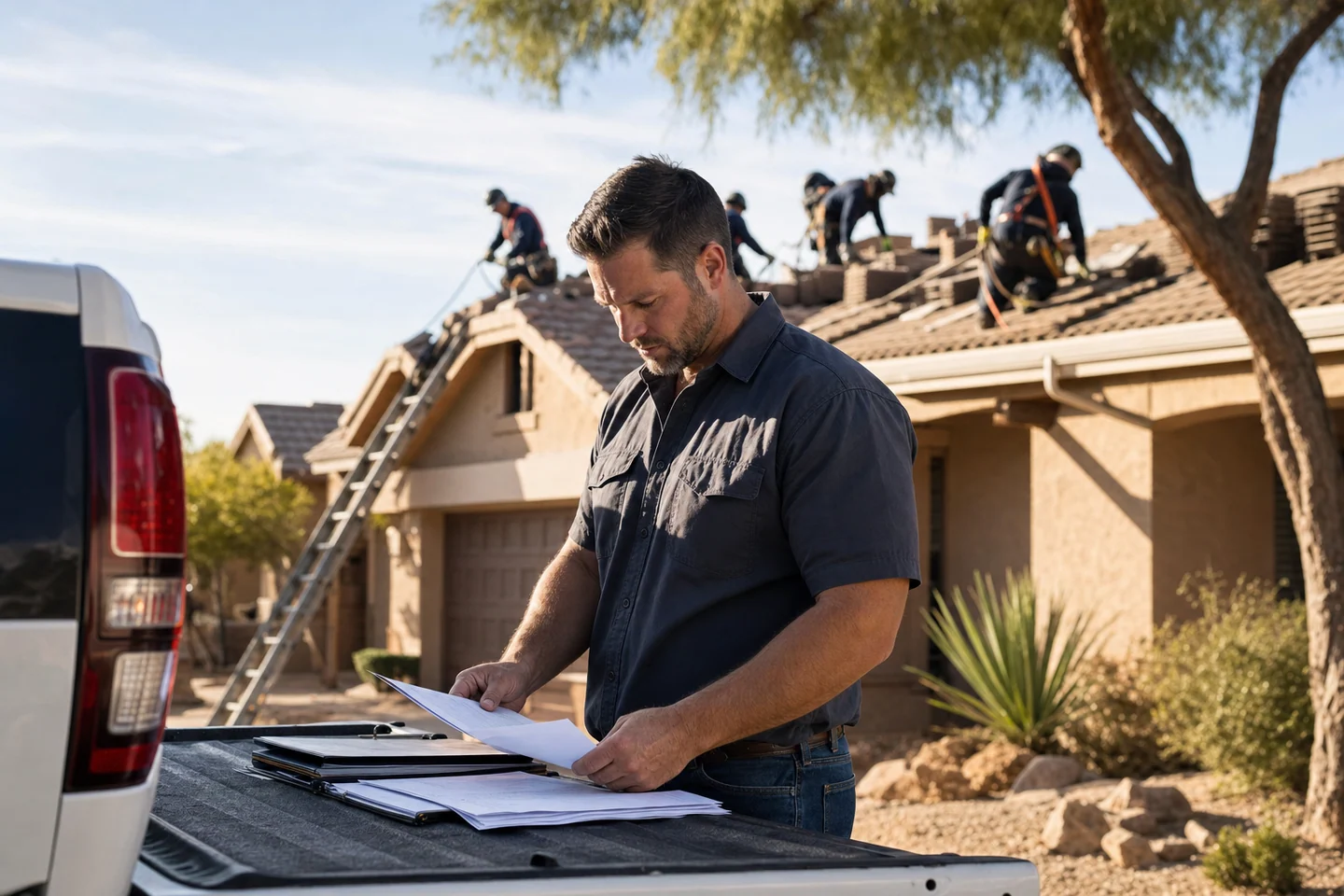
Show Arizona roofers how uninsured subs can trigger claims, audit costs, and contract problems.
Why subcontractor insurance is a roofing problem in Arizona
For Arizona roofing contractors, subcontractors can help you scale fast, keep projects moving, and handle labor swings during busy seasons. But they can also create one of the biggest hidden insurance problems in your business. When a subcontractor is uninsured, underinsured, or poorly documented, the fallout can show up in claims, contracts, and workers compensation audits.
Many roofing owners assume a 1099 relationship automatically shifts the risk away from their company. It does not. If a subcontractor gets hurt, damages property, or shows up in an audit without the right paperwork, your business may still feel the financial impact. That is why this topic matters so much for Arizona roofers trying to build a cleaner, more insurable operation.
Search demand around subcontractor insurance is real, and it lines up closely with the way blue-collar roofing companies actually operate. More importantly, it fills a content gap for PrimeRisk because it connects roofing, workers compensation, and documentation without repeating earlier posts about general liability, return-to-work, or basic workers comp.
PrimeRisk already has useful supporting content, including this breakdown of Arizona subcontractor insurance pitfalls for roofers and this guide to workers compensation for Arizona roofers. Together, they reinforce a simple point: if you hire subs without a process, you may inherit far more risk than you expected.
The workers compensation side is especially important. Arizona contractors can verify active coverage through the Industrial Commission of Arizona coverage verification page. That matters because audits often come down to documentation. If you cannot prove a subcontractor carried proper coverage, payroll can be pulled into your audit, which can lead to surprise premium charges.
There is also a claims issue. If a subcontractor causes damage on a roofing job, your client will not care much about how you classified that crew internally. They will want the problem fixed. If the subcontractor has weak or mismatched insurance, the pressure often rolls back uphill to your company.
That is why subcontractor insurance is not just an office task. It is a core risk-control issue for Arizona roofing businesses. The stronger your process is around certificates of insurance, workers compensation verification, and written agreements, the better protected you are when a claim, dispute, or audit lands on your desk.
Build a subcontractor process that protects claims and payroll
Once you understand why uninsured or poorly documented subcontractors can hurt an Arizona roofing company, the next step is building a repeatable process that protects your claims, contracts, and payroll. The goal is not to create red tape. The goal is to make sure every crew you hire is properly documented before they ever set foot on a roof.
Start with a written subcontractor checklist. Before work begins, require a signed subcontractor agreement, a current certificate of insurance, and proof of active workers compensation when applicable. If the sub carries general liability, confirm the policy matches the type of work they are doing. If they perform roofing, the certificate should not point to a completely unrelated class of business. PrimeRisk’s own article on properly insured Arizona subcontractors explains how easy it is for a certificate to look fine at a glance while still leaving major gaps.
Next, verify workers compensation status instead of just taking someone’s word for it. Arizona contractors can confirm active coverage through the Industrial Commission of Arizona workers compensation verification resource. This simple step helps you separate truly insured subcontractors from crews that are only saying they are covered. It also gives you a cleaner file if a claim or audit later raises questions.
Use a standard review process for every subcontractor file. A strong file should include:
- A signed subcontractor agreement spelling out insurance requirements
- A current certificate of insurance for general liability
- Workers compensation proof or clear documentation of status
- W-9 and business entity details
- A note showing who reviewed the file and when
That level of consistency matters because roofing businesses often grow fast during busy seasons. When production ramps up, it is tempting to hire whichever extra crew is available. But speed is exactly when documentation tends to slip. If you wait until audit time to chase missing certificates or explain why a crew was treated as a subcontractor, you are already on defense.
It also helps to review subcontractor files more than once. Certificates expire. Policies cancel. A crew that looked clean six months ago may no longer be insured today. Set a calendar reminder to refresh documentation at least annually and any time a subcontractor takes on a larger role in your operation.
Finally, connect your subcontractor process to your field and office teams. Estimators, production managers, and office staff should all know the rule: no file, no work. That one standard prevents last-minute exceptions that turn into expensive problems later. When your subcontractor process is clear, documented, and consistently enforced, your Arizona roofing business becomes easier to insure, easier to audit, and easier to defend when something goes wrong.
FAQ: Arizona roofing subcontractor insurance and audit risks
Strong subcontractor controls do more than reduce audit surprises. They also improve the way your Arizona roofing company handles claims, contract disputes, and growth. When you can show organized files, verified coverage, and consistent standards, carriers and clients see a business that takes risk seriously.
That matters when a claim hits. If a subcontractor causes property damage, triggers a job-site injury issue, or becomes part of a contract dispute, one of the first questions will be whether they were truly independent and properly insured. When your documentation is weak, that question becomes expensive very quickly. When your documentation is tight, you have a much stronger starting point for pushing the claim toward the right policy.
It also matters when larger clients review your company. General contractors, property managers, and sophisticated homeowners increasingly expect Arizona roofers to manage subcontractors professionally. Clean files and current certificates help you pass those reviews faster and with less back-and-forth.
As your company grows, use quarterly check-ins to keep subcontractor risk under control. Review who is active, who has expiring certificates, and which crews are doing your riskiest work. If a subcontractor is handling more tear-offs, more steep-slope jobs, or more high-value projects, make sure your documentation and insurance requirements still fit that exposure.
Keep your review simple and visual:
- Active subcontractors with current files
- Subcontractors missing updated certificates
- Crews that need contract revisions
- High-risk trades or scopes needing extra scrutiny
This gives you an easy management snapshot instead of a pile of disconnected PDFs.
Another smart move is to compare your subcontractor process against your own insurance program each year. If your carrier has strict expectations around subcontracted work, residential roofing, or completed operations, your agreements and file requirements should support those expectations. The more aligned your internal process is with your insurance program, the fewer ugly surprises you are likely to face after a claim.
FAQ
Do I need certificates of insurance from every roofing subcontractor?
Yes. Every subcontractor should provide current proof of coverage before starting work.
Can uninsured subcontractors affect my workers comp audit?
Yes. If you cannot show proper documentation, their labor may be charged back into your audit.
How do I verify workers compensation in Arizona?
Use the Industrial Commission of Arizona coverage lookup to confirm active coverage.
How often should I update subcontractor files?
At least annually and any time a certificate expires or the subcontractor’s role changes.
What is the simplest rule to protect my company?
No file, no work. If the paperwork is incomplete, the crew should not start the job.