
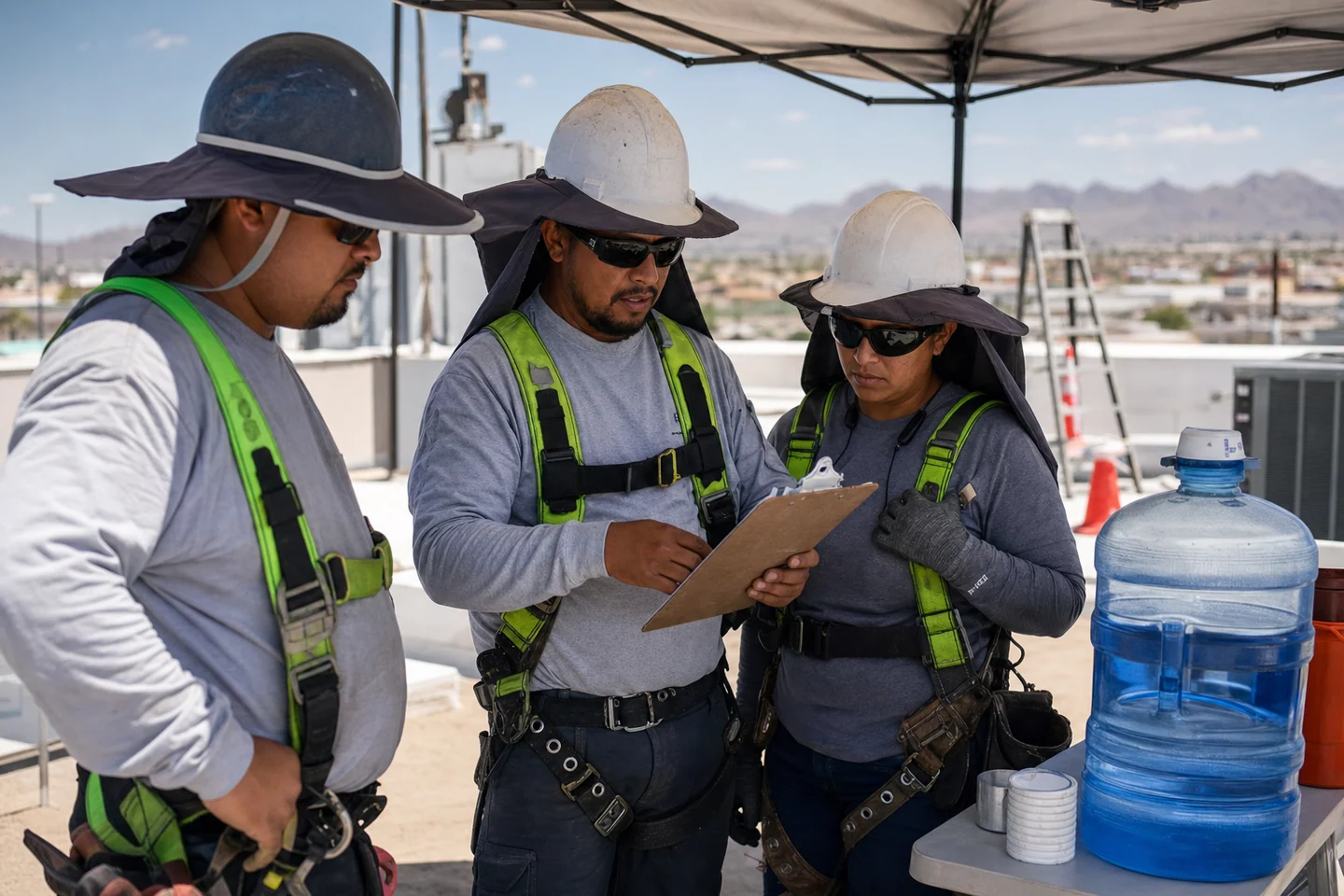
Show Arizona roofers how heat safety steps can reduce workers comp claims and keep crews productive.
Why Arizona heat creates a different workers comp problem for roofers
Arizona roofing companies know that summer changes everything on the jobsite. Roof temperatures climb fast, physical exertion becomes more draining, and ordinary tasks can become risky much earlier in the day. Yet many workers compensation conversations still focus only on falls, tool injuries, and lifting strains. Those issues matter, but heat illness deserves its own place in the discussion.
OSHA’s heat exposure overview explains that heat illness is preventable, yet thousands of workers become sick from occupational heat exposure each year. OSHA also notes that hazardous heat exposure is not limited to extreme heat waves. Risk rises when heavy physical activity, hot conditions, lack of acclimatization, and heat-retaining clothing combine. Roofing checks every one of those boxes.
For roofers, heat illness is not only a medical concern. It is also a claims concern. A dehydrated worker may lose focus, misstep near an edge, handle materials poorly, or fail to report symptoms until the situation is more serious. OSHA’s fact sheet Protecting Workers from the Effects of Heat explains that heat exposure can lead to cramps, exhaustion, and life-threatening heat stroke if not addressed quickly.
This topic matters because one preventable heat issue can create several business problems at once. Productivity drops. Supervisors get pulled into an emergency response. Crews lose momentum. A workers comp claim may follow, and the employer now has to explain what steps were in place before the event happened. That is why Arizona roofers benefit from treating heat illness as a workers comp issue, not just a comfort issue.
Water, rest, shade, and acclimatization that reduce claim risk
Once a roofing company sees why heat changes the risk, the next step is building a repeatable field routine that is easy for supervisors to use. The strongest plans are not complicated. They are visible, consistent, and tied to the way the crew actually works.
OSHA’s Water. Rest. Shade. guidance gives employers a clear starting point. Workers need cool drinking water close to the work area. They need breaks that happen before symptoms become severe. They need access to shade or cooler recovery areas. OSHA also stresses that workers should drink water frequently and that longer jobs may require electrolyte replacement.
Acclimatization is just as important. OSHA’s National Emphasis Program on heat-related hazards highlights acclimatization procedures for new and returning employees. That matters for roofers because the highest-risk worker is often not the veteran who has been in the field every day. It may be the new hire, the returning employee, or the worker who moves suddenly into longer summer shifts.
A practical heat-illness routine for roofers should include:
- Water access: Keep cool water at the work area and assign someone to check supply during the day.
- Rest breaks: Schedule recovery breaks before workers look exhausted, especially on exposed roofs.
- Shade planning: Set up a shaded area or cooler recovery point whenever possible.
- Acclimatization: Ease new and returning workers into heavier heat exposure instead of treating every shift the same.
- Buddy awareness: Teach crews to watch for confusion, cramping, headache, dizziness, and unusual fatigue.
- Emergency response: Make sure every supervisor knows when symptoms require immediate action.
For PrimeRisk’s audience, this is also strong because it turns safety language into business language. Better heat controls do not just protect workers. They protect schedules, reduce disruption, and improve the claims story when something does happen.
Annual reviews, crew protocols, and FAQ for hotter roofing days
Arizona roofers do not need a complicated safety manual to improve this exposure. They need a summer plan that supervisors will actually use. The best place to start is one seasonal heat checklist that gets reviewed before the hottest stretch of the year and reinforced whenever new workers join the crew.
A practical annual review should include:
- Reviewing prior heat-related incidents, near misses, and dehydration complaints
- Refreshing supervisor training on symptoms, emergency response, and acclimatization
- Confirming water, shade, and break procedures for current job types
- Checking how new-hire onboarding addresses heat exposure on roofs
- Comparing field practices to workers comp goals and claim trends
FAQ
Why does heat illness matter so much for roofing workers comp?
Because heat stress can lead to dehydration, dizziness, fainting, slower decisions, and secondary injuries that make claims more expensive.
Who is most at risk on a roofing crew?
New hires, returning workers, and employees who are not acclimatized to long hours on hot roofs are often at higher risk.
What is one simple first step for an Arizona roofer?
Use a daily summer checklist covering water supply, break timing, shade access, and symptom awareness before work starts.
Does heat only matter during official heat waves?
No. OSHA notes that hazardous heat exposure can happen whenever conditions, physical workload, and lack of acclimatization combine.
How often should a roofing company review heat-illness controls?
At least annually and again whenever summer staffing, schedules, or job demands change.