
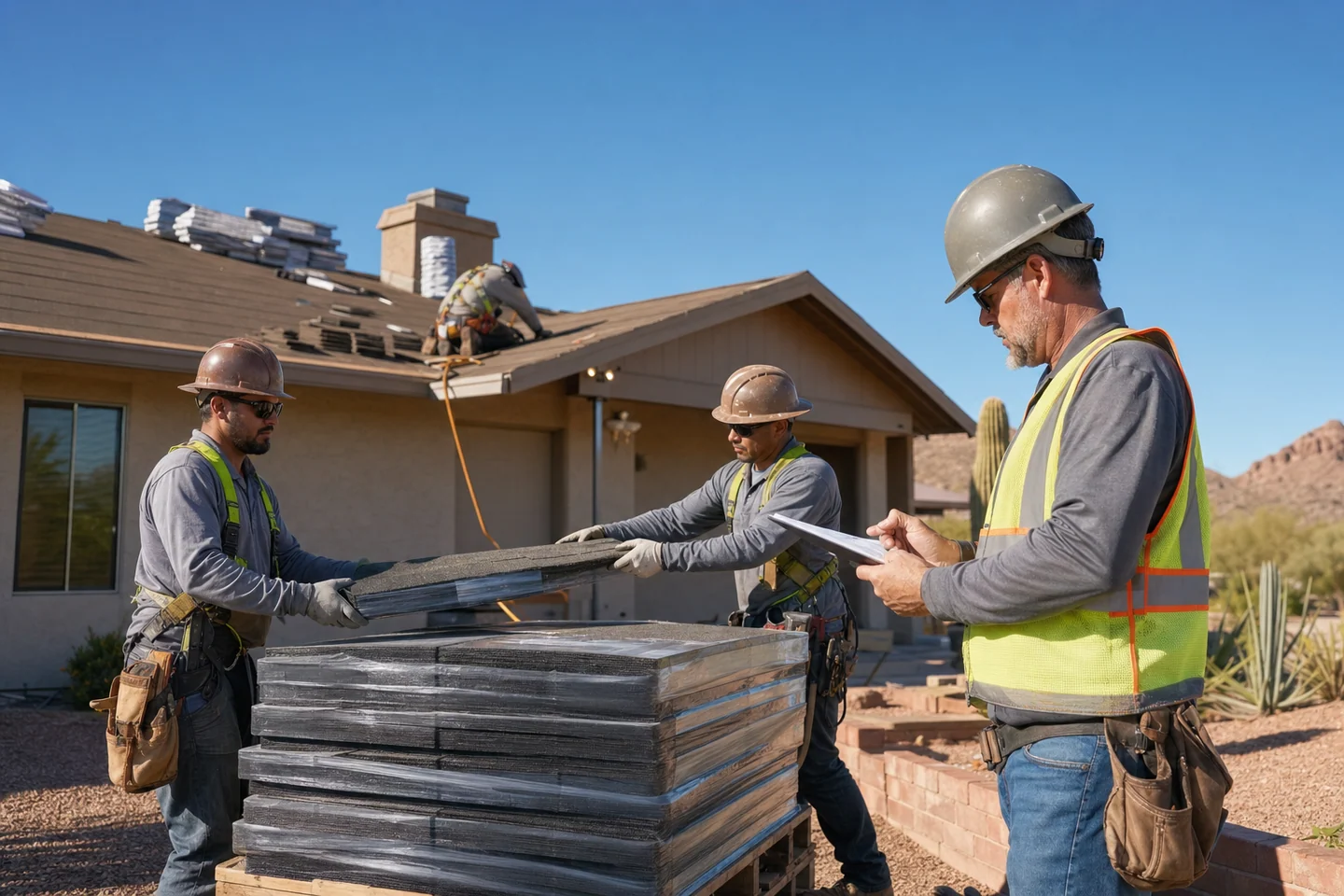
Show Arizona roofers how safer lifting, staging, and load handling can reduce workers comp claims and crew disruption.
Why material handling creates comp problems for roofers
Arizona roofing companies spend a lot of time thinking about falls, ladders, and heat stress. Those hazards deserve attention, but many workers compensation claims start with something less dramatic and far more routine: moving materials. Shingle bundles, rolls, underlayment, tear-off debris, tools, and equipment all have to be lifted, carried, staged, and repositioned throughout the day. When that movement is rushed or poorly planned, the result can be a strain injury, a slip, or a more serious accident that disrupts the entire job.
OSHA’s Protecting Roofing Workers guide explains that roofers face serious hazards unless employers identify the conditions surrounding the work and train employees appropriately. OSHA’s Materials Handling and Storage publication also emphasizes that improper moving and storing of materials can lead to injuries affecting the back, shoulders, hands, and feet. For roofers, that lesson is highly practical because material movement happens constantly, often before the crew even starts the main roofing task.
The risk is easy to understand. Workers may carry bundles up ladders, drag materials across uneven surfaces, twist while unloading, or move debris quickly to keep production going. In Arizona, heat and fatigue can make those ordinary tasks more dangerous as the day goes on. A shoulder strain from carrying bundles, a back injury from repeated lifting, or a slip while moving materials across a cluttered roof can all become workers comp claims.
That is why material handling deserves its own workers comp conversation. A single preventable lifting or carrying injury can create medical costs, lost time, crew disruption, and harder renewal discussions. For PrimeRisk’s audience, this topic is valuable because it turns an ordinary roofing task into a claims-control opportunity that owners and supervisors can actually improve before the next injury happens.
Lifting, staging, and crew habits that reduce claim risk
Once a roofing company understands why material handling creates so much claim pressure, the next step is building a repeatable system around how materials are staged, lifted, moved, and carried. This is where many contractors can lower injury frequency without changing the type of work they perform. The goal is not to eliminate physical work. The goal is to remove the avoidable strain, twisting, rushing, and awkward movement that make injuries more likely.
OSHA’s Materials Handling and Storage publication explains that employers should train employees in safe handling practices and reduce hazards related to moving and storing materials. OSHA also notes in its interpretation on safe weight limits when manually lifting that there is no single OSHA weight limit for manual lifting, which makes planning, ergonomics, and task design even more important. For roofers, that means the safer question is not “How much can this worker probably carry?” It is “How should this load be staged so the worker does not have to carry it that way in the first place?”
A stronger roofing material-handling routine should include:
- Ground staging: Keep bundles, tear-off debris, and tools organized so crews are not twisting around clutter or carrying loads farther than needed.
- Lift planning: Use team lifts or mechanical help for awkward, heavy, or repetitive loads instead of relying on brute effort.
- Roof loading discipline: Avoid over-stacking materials in ways that create unstable footing or repeated re-handling.
- Clear carry paths: Keep hoses, cords, loose shingles, and scrap out of the route where workers move materials.
- Supervisor attention: Watch for fatigue, rushed behavior, and bad lifting habits when crews are trying to make up time.
- New-hire coaching: Show newer workers how experienced crews stage and move materials safely instead of assuming they will figure it out.
For PrimeRisk’s audience, this section is especially valuable because it turns safety advice into an operating system. Better staging and lifting habits do not just protect workers. They also protect production, reduce downtime, and create a better claims story if an injury still occurs. That matters in Arizona, where roofing crews often work fast, in heat, and under customer pressure. Stronger handling habits help keep one routine task from becoming a costly workers comp problem.
Annual review checklist and FAQ for cleaner comp outcomes
Arizona roofing companies do not need a complicated ergonomics program to improve this exposure. They need one repeatable material-handling checklist and one seasonal review before busy periods make shortcuts feel normal. The best place to start is by treating bundle movement, debris removal, and daily staging as formal procedures instead of routine field habits that never get discussed.
A practical annual review should include:
- Reviewing prior strain injuries, back claims, slips during carrying, and near misses
- Refreshing training on lifting technique, team lifts, and safer staging plans
- Checking whether ladders, hoists, conveyors, and other support equipment are actually reducing manual carrying
- Reinforcing supervisor expectations for rushed jobs, repair work, and cleanup days
- Comparing material-handling issues to workers comp goals and claim trends
FAQ
Why does material handling matter so much for roofing workers comp?
Because repetitive lifting, awkward carrying, and rushed staging can lead to strains, slips, falls, and lost work time.
Are these claims only about heavy bundles?
No. Smaller repetitive lifts, tear-off cleanup, awkward twisting, and carrying tools across uneven surfaces also create injuries.
What is one simple first step for an Arizona roofer?
Use a short daily checklist for staging, carry paths, team lifts, and debris control before production speeds up.
Does this still matter for experienced crews?
Yes. Familiarity often leads to shortcuts, and shortcuts are exactly what make routine lifting more dangerous over time.
How often should a roofing company review this exposure?
At least annually and again whenever strain claims, rushed jobs, or repeated near misses start appearing.