
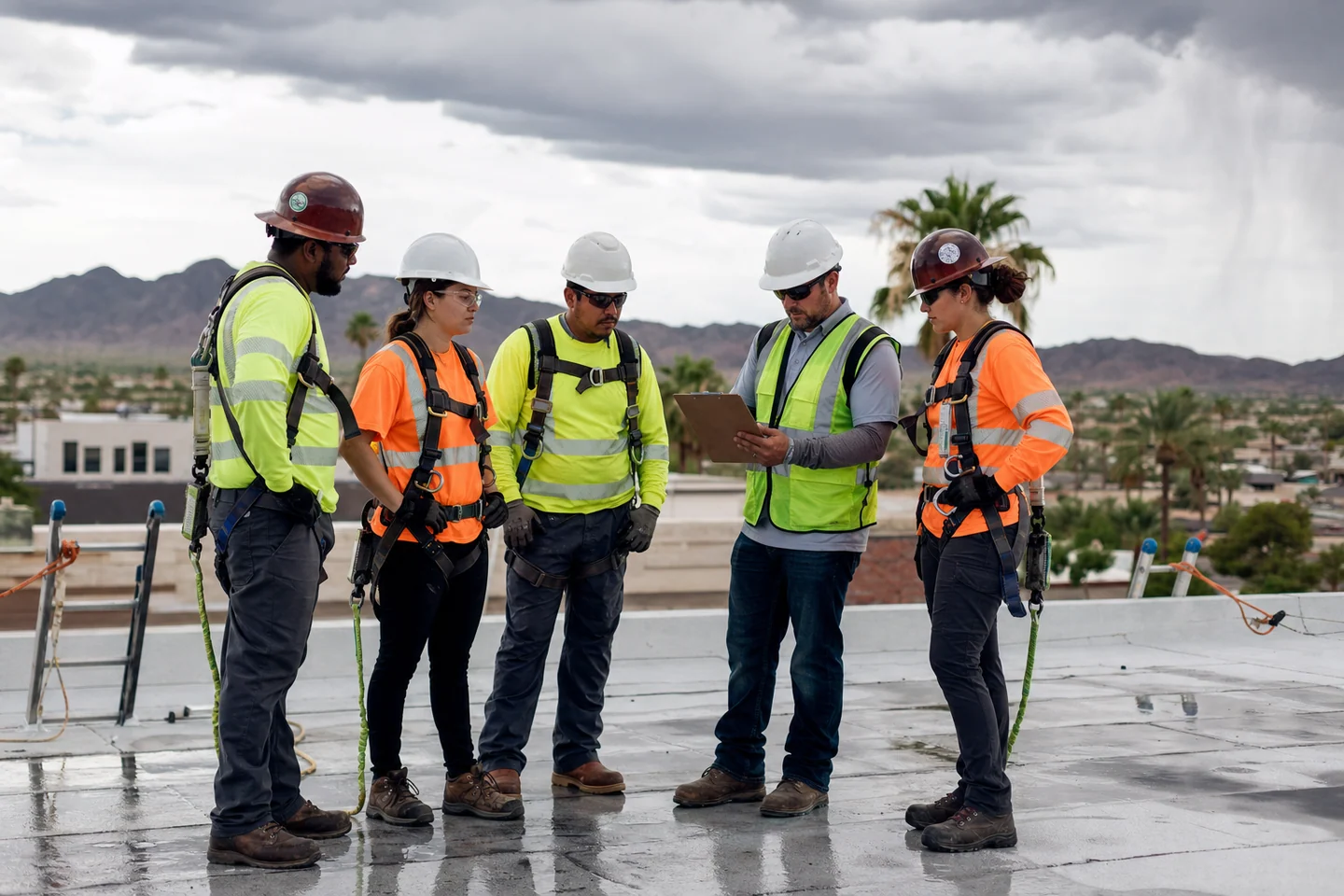
Arizona roofers can cut storm-season injuries and comp friction with safer cleanup, ladder use, and post-monsoon planning.
Why Arizona monsoon season creates a different comp problem
Arizona roofing companies already know that summer is dangerous, but monsoon season creates a different kind of workers compensation problem than ordinary hot-weather roofing. Instead of a predictable dry-heat jobsite, crews may deal with slick surfaces, rushed repairs, unstable materials, storm debris, humidity, and ladder access on properties that were just damaged by wind and rain. That change matters because injury risk rises fast when emergency response and ordinary production work start to overlap.
OSHA’s Protecting Roofing Workers guide explains that roofers face serious fall and ladder hazards unless employers identify and control the conditions surrounding the work. OSHA’s storm cleanup resources also remind employers that disaster response work can introduce multiple hazards at once, including falls, electrical exposure, unstable structures, and heat stress.
For roofers, that combination is exactly the issue. A crew may be called to inspect a leak, secure a temporary covering, or address visible storm damage before the site is fully stabilized. Workers can move from a ladder to a slick roof surface while carrying tools, watching weather, and responding to a worried property owner. If one worker slips, strains a shoulder while handling wet materials, or missteps near a compromised edge, the company may be dealing with a workers comp claim before the permanent repair scope is even written.
That is why monsoon season deserves its own workers comp conversation. One storm-related injury can create medical costs, lost productivity, crew disruption, and harder renewal discussions. Arizona roofers benefit when they treat storm response as a claims-control issue, not just a customer-service issue.
Safer cleanup, ladder, and tarp routines after monsoon damage
Once a roofing company recognizes that monsoon work creates a different injury profile, the next step is building a repeatable field routine for cleanup, emergency tarping, and limited repair work. The goal is not to eliminate urgency. The goal is to keep urgency from turning into a preventable claim.
OSHA’s roof inspection, tarping, and repair guidance is useful because it highlights the hazards that appear when crews access damaged roofs after storms. Workers may face unstable surfaces, wet materials, electrical hazards, and fall exposure at the same time. OSHA’s Roof Tarping Safety publication also stresses that damaged roofs should not be accessed until structural integrity is considered and fall protection is addressed.
That matters for Arizona roofers because storm-response work often happens fast. A customer wants help immediately. The crew wants to stop interior damage. The company wants to preserve the relationship. But speed without structure can create the exact kind of comp claim that makes a bad weather week even more expensive.
A safer monsoon-response routine should usually include:
- Site assessment first: Check for downed power lines, slick access points, unstable decking, and storm debris before anyone climbs.
- Ladder control: Confirm stable footing, correct setup angle, and clear tie-off expectations before roof access begins.
- Limited access rules: Keep only the needed workers on the roof instead of crowding a damaged surface.
- Tool and material staging: Prevent carrying extra material across wet or compromised areas unnecessarily.
- Heat and hydration checks: Storm clouds do not remove Arizona heat exposure, especially when humidity rises after rain.
- Immediate reporting: Document slips, strains, near misses, and unstable conditions before the crew leaves the site.
For PrimeRisk’s audience, this section is valuable because it translates safety guidance into business language. Better storm-response habits do not just protect workers. They protect schedules, reduce claim friction, and create a cleaner story if an injury still happens.
Annual review checklist and FAQ for storm-season claim control
Arizona roofing companies do not need a complicated storm manual to improve this exposure. They need one seasonal review before monsoon activity ramps up and one simple checklist crew leaders can actually use when storm calls start coming in. The strongest first step is to treat post-storm roofing work as its own operating mode rather than as normal production work with wet materials.
A practical annual review should include:
- Reviewing prior storm-season injuries, near misses, and ladder incidents
- Refreshing training on roof access, tarp work, and damaged-surface hazards
- Confirming that ladders, harnesses, anchors, and rain-response supplies are ready
- Rechecking how crews report strains, slips, and unstable roof conditions
- Comparing storm-response work to workers comp goals and claim trends
FAQ
Why does monsoon season raise workers comp risk for roofers?
Because wet surfaces, unstable materials, ladder hazards, humidity, and urgent repair calls can all increase injury exposure.
Is post-storm roof work different from normal roofing work?
Yes. Damaged roofs can involve structural weakness, slick footing, hidden debris, and emergency pressure that change the safety picture.
What is one simple first step for an Arizona roofer?
Use a storm-response checklist covering site assessment, ladder setup, roof-access limits, and incident reporting before work begins.
Do storm clouds remove Arizona heat risk?
No. Crews can still face dehydration and fatigue after rain, especially during humid monsoon conditions.
How often should a roofing company review this exposure?
At least annually before monsoon season and again after any storm-related injury trend or near miss pattern.