
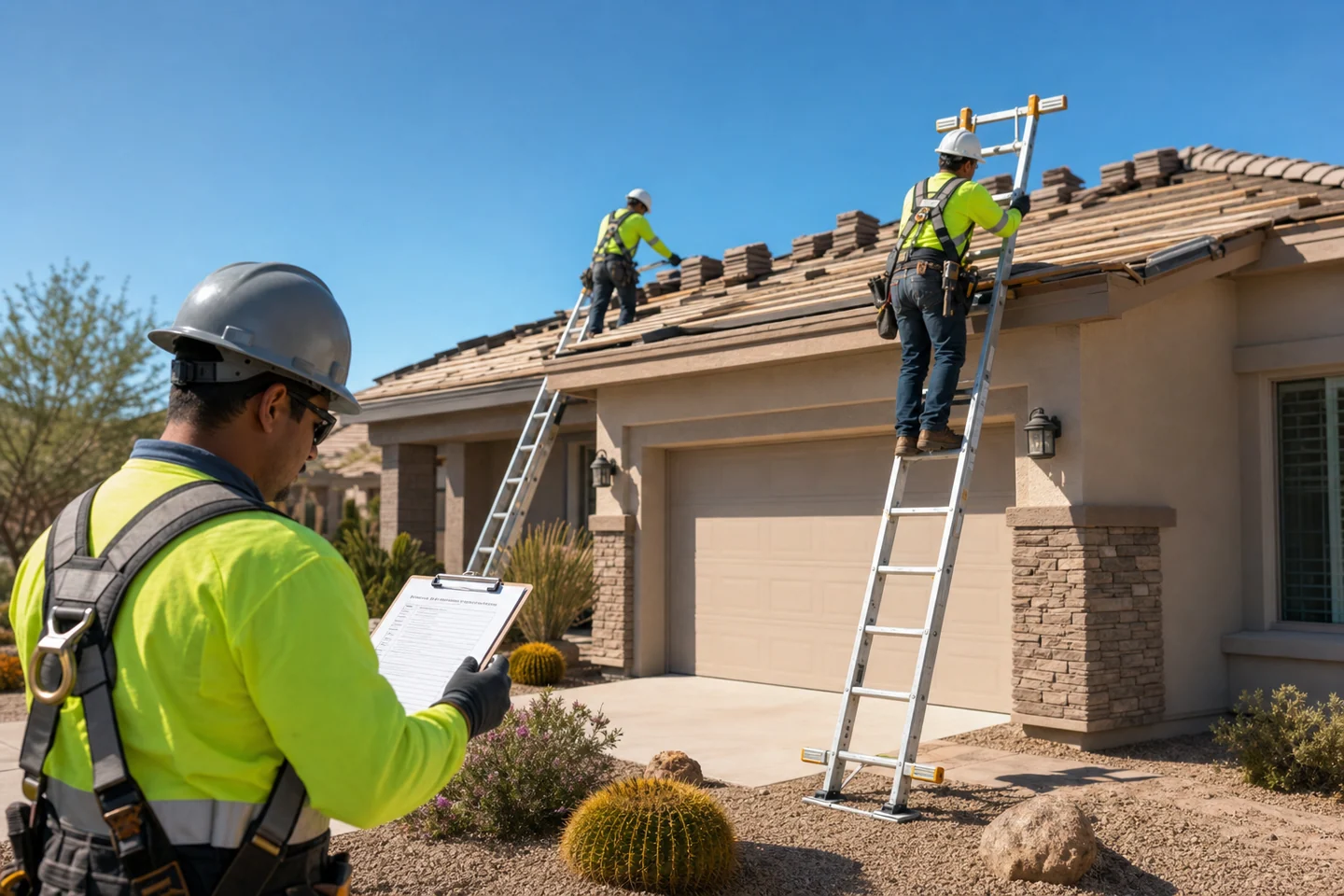
How Arizona roofers can reduce ladder injuries, improve training, and keep workers comp claims from escalating.
Why ladder injuries create workers comp problems for roofers
Arizona roofing companies know that falls are a major safety concern, but ladder injuries often get less attention than they deserve. That is a mistake. Many workers compensation claims start before a roofer is fully working on the roof. They begin while accessing the roof, descending for materials, repositioning a ladder, or rushing through a setup that felt routine on a busy day.
OSHA’s Protecting Roofing Workers guide explains that roofers face serious fall and ladder hazards unless employers identify the conditions surrounding the work and train workers appropriately. OSHA’s Fall Protection overview also reinforces that fall hazards remain one of the most common causes of serious work-related injuries and deaths in construction.
The practical risk for roofers is easy to understand. Ladder use happens repeatedly throughout the day, often under time pressure. Workers carry tools, move quickly between tasks, and step on uneven ground around homes, commercial buildings, and repair sites. In Arizona, intense heat can also reduce focus and increase fatigue, making ordinary access points feel more dangerous as the day goes on. A misstep at the base, a rushed transition at the top, or poor footing during setup can easily become a workers comp claim.
That is why ladder injuries deserve their own workers comp conversation. A single access-related injury can create medical costs, lost productivity, crew disruption, and more difficult renewal conversations. For PrimeRisk’s audience, this topic is valuable because it turns a common field hazard into a claims-control issue that owners and supervisors can actually address before the next incident happens.
Setup, access, and supervision habits that reduce claim risk
Once a roofing company understands why ladder use creates so much claim pressure, the next step is building a repeatable access routine instead of relying on habit. Many ladder-related injuries do not come from dramatic roof failures. They happen while climbing, descending, carrying materials, stepping off at the wrong point, or rushing through setup because the crew has already done “a hundred jobs like this.”
OSHA’s guide Protecting Roofing Workers and its broader publication Fall Protection in Construction both reinforce that employers need to plan work, train employees, and control fall hazards before work begins. For roofers, ladder access is part of that planning, not a side detail.
A safer ladder routine should usually include:
- Ground assessment: check soil, gravel, slope, and surface stability before the ladder is even raised.
- Proper angle and extension: make sure the ladder is set correctly and extends far enough for safer transition on and off the roof.
- Secure placement: reduce movement at the base and top whenever possible.
- Three-point contact habits: reinforce climbing discipline, especially when crews are carrying tools or rushing.
- Clear landing areas: keep the top and bottom zones free of debris, cords, and loose materials.
- Supervisor attention: watch new workers and fast-moving crews closely when ladder routines start getting sloppy.
For PrimeRisk’s audience, this section is especially practical because it turns safety language into operating habits. Better ladder routines do not just protect workers. They protect schedules, reduce disruption, and improve the company’s claim story if an injury still occurs. A workers comp carrier, a supervisor, and an injured employee all see the situation differently when the company can show that ladder setup, training, and site access were treated seriously.
It also keeps the content visually readable. Strong paragraph breaks, a clearly separated list, and a practical tone make the advice easier for busy contractors to scan and use. That matters because safety content only helps if crews and owners can actually absorb it quickly enough to change behavior before the next job starts.
Annual safety review checklist and FAQ for cleaner comp results
Arizona roofing companies do not need a complicated safety manual to improve this exposure. They need one repeatable ladder checklist and one seasonal review before busy periods make shortcuts feel normal. The best place to start is by treating ladder access as its own operating procedure, not as a routine setup task that gets skipped over when the schedule is full.
A practical annual review should include:
- Reviewing prior ladder incidents, slips, strains, and near misses
- Refreshing training on setup, climbing discipline, and roof transition points
- Checking the condition of ladders, stabilizers, footing aids, and related equipment
- Reinforcing supervisor expectations for new hires and rushed repair work
- Comparing ladder-related issues to workers comp goals and claim trends
FAQ
Why do ladder injuries matter so much for roofing workers comp?
Because even a short fall or awkward step can lead to expensive injuries, lost work time, and harder claim management.
Are ladder injuries only about falls from height?
No. They also include strains, slips, bad transitions, and injuries that happen while climbing or carrying tools.
What is one simple first step for an Arizona roofer?
Use a short ladder-access checklist covering ground stability, setup angle, landing area condition, and who verifies the setup before climbing.
Does this matter even for experienced crews?
Yes. Familiarity often creates shortcuts, and shortcuts are exactly what make routine ladder use more dangerous over time.
How often should a roofing company review this exposure?
At least annually and any time new crews, rushed repair work, or repeated near misses start appearing.